Southampton · Duct Doctor
Kitchen extract cleaning in Southampton
TR19® kitchen extract cleaning across Southampton, for restaurants, pubs, hotels, university and hospital kitchens, done when you’re closed.
- BESCA Vent Hygiene Elite member
- TR19® certificate and photo report
- Overnight, weekend and 24/7 emergency cover
Kitchen extract cleaning in Southampton: call for a fixed quote
TR19® kitchen extract cleaning in Southampton
Southampton is a port city and a university city, with a busy centre, waterfront restaurants and a long list of pubs, hotels and institutional kitchens. All of them rely on extract systems that collect grease with every service. We clean kitchen extract to BESA’s TR19® Grease specification across Southampton and the surrounding area, covering the canopy, plenum, filters, ductwork, fan and discharge.
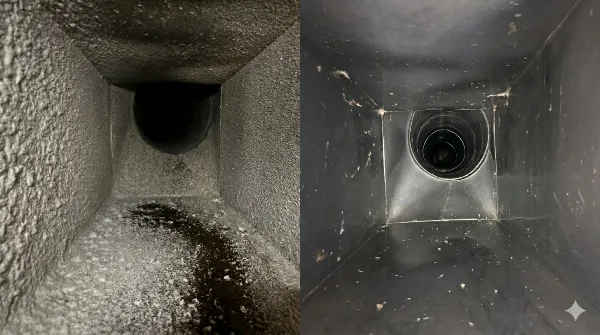
We survey first, from photos or on site, and give you a fixed quote, usually within one working day. We clean when the kitchen is closed: evenings, overnight or at weekends. Afterwards you get a TR19® certificate and a photo report with before and after pictures, ready for your insurer and EHO. We are a BESCA Vent Hygiene Elite member, cleaning to BESA TR19® Grease. Read more on our kitchen extract cleaning page.
Not sure when the system was last cleaned? A TR19 inspection with grease readings shows where you stand. It is a good first step after taking over a lease or before an insurance renewal.
A port, two universities and a busy city centre
Southampton’s docks handle cruise ships and cargo, and the city has grown around the water. Hotels near the port and the centre serve travellers and visitors, often from early breakfast until late. Kitchens that cook for that many hours sit in BESA’s heavier cleaning bands, and their extract needs cleaning more often than a quieter kitchen.
The University of Southampton and Solent University bring halls of residence, refectories and cafés, and with them term-time peaks and holiday lulls. Holidays are the natural time to clean those systems. Southampton General Hospital and the city’s care homes have kitchens that cook every day of the year, where cleaning has to be planned around meals and infection control.
In the centre, shopping and leisure areas such as WestQuay bring restaurants and food outlets that often share extract routes or roof space. Where tenants’ ducts join a common system, it matters who cleans which part, and the landlord and each tenant should be clear about that. Waterfront sites also face salt air, which can corrode roof fans and fixings. When we clean the extract fan, we check its condition and tell you what we find.
Away from the centre, suburban high streets and district centres have their own restaurants, takeaways and pubs. Many are in converted shops with flats above, where the extract runs up the back wall. A clean duct protects the people living above as well as the business.
Food Standards Agency records list about 373 restaurants, cafés and canteens, 140 takeaways, 103 pubs and bars and 25 hotels and guest houses within roughly a mile and a half of the centre of Southampton, plus 42 schools and colleges and 60 hospitals, care and childcare premises. Every one that cooks under a canopy has an extract that needs cleaning. Source: FSA food hygiene rating data, October 2026.
Who inspects Southampton kitchens
Food businesses in the city are inspected by Southampton City Council’s environmental health team. Inspectors look at the cleanliness of the premises and equipment, extraction included, and ratings are published on the Food Standards Agency’s food hygiene ratings site.
Fire safety in workplaces is enforced by Hampshire and Isle of Wight Fire and Rescue Service. Its officers carry out audits and can take enforcement action under the Regulatory Reform (Fire Safety) Order 2005. That law makes the responsible person, usually the employer, owner, landlord or managing agent, assess and reduce fire risk, which in a kitchen means keeping grease in the extract under control. GOV.UK’s guide to workplace fire safety explains more.
TR19® itself is not law. It is BESA’s specification and the benchmark that fire officers, EHOs and insurers look to. BESA’s kitchen extract guidance sets minimum cleaning intervals by daily cooking hours, from every 3 months for heavy use to every 12 months for light use. A certificate and photo report from each clean is your evidence.
If you have taken over a kitchen, ask the previous operator or landlord for the last certificate. If there isn’t one, an inspection is the place to start.
The mix of kitchens in Southampton
We clean extract for restaurants and pubs in the centre and the suburbs, and for hotels near the port, where laundry extract and riser ductwork can be cleaned in the same programme. University and college kitchens are covered on our schools and colleges page, and hospital and care kitchens on hospitals and care homes. Offices and shopping centres need ventilation, AHU and fire damper work, and food production and leisure sites may need LEV testing too. We also clean grease traps and carry out kitchen deep cleans.
Hotels and restaurants that get busier in summer can book cleans before their busiest weeks. Operators with several kitchens across Southampton and Hampshire can put them on one maintenance contract, with each site cleaned at the interval its cooking hours need and its own certificate and photo report. Our 24/7 emergency line covers fan failures and urgent cleans between scheduled visits.
How it works
- Send details. Tell us about your kitchen or building and send a few photos: canopy, filters, access panels and the last certificate if you have one.
- Get a fixed quote. We survey from your photos or on site and give you a fixed price, usually within one working day.
- We clean. We arrive when you’re closed, protect the kitchen and clean the system back to bare metal wherever it can be reached.
- Certified. You get a TR19® certificate and a photo report, with the readings, anything we couldn’t reach and the next clean date.
Our services in Southampton
- Kitchen extract cleaning: Full TR19® Grease cleaning of your kitchen extract, from the canopy and filters through the ductwork to the fan and discharge, with a certificate and photo report.
- Canopy and hood cleaning: Kitchen canopies and hoods cleaned inside and out, along with the plenum behind the filters and the filters themselves, as part of a full TR19® Grease clean or between cleans.
- Ductwork cleaning: Kitchen extract ductwork cleaned along its full length, horizontal runs and vertical risers, through access panels, with grease readings before and after.
- Extract fan cleaning: Kitchen extract fans and their housings cleaned of grease, so the fan does its job and the last part of the system isn’t left as a fire risk.
- Fire damper testing: Fire dampers drop tested, reset and recorded, and smoke dampers tested through their controls, so you can show each one closes when it should.
- Air handling unit cleaning: Air handling units cleaned inside: filter sections, coils, drain trays, fans and internal surfaces, as part of TR19® Air ventilation hygiene.
- Ventilation duct cleaning: General supply and extract ductwork inspected and cleaned to BESA’s TR19® Air, the hygiene specification for ventilation beyond the kitchen.
- TR19 inspections and grease testing: Grease thickness testing, surveys and TR19® audits that show how much grease is in your kitchen extract and when it needs cleaning.
- Extract fan repair and replacement: Kitchen extract fans diagnosed, repaired or replaced, so smoke, heat and grease are pulled out of the kitchen and the extract system works as it should.
- Grease filter exchange: Dirty canopy grease filters swapped for clean ones on a regular schedule, so the first line of defence in your extract keeps working.
- Commercial kitchen deep cleaning: Commercial kitchens deep cleaned from ceiling to floor, including the places daily cleaning can’t reach: behind, under and inside the cooking equipment.
- Grease trap cleaning: Under-sink and inline grease traps emptied and cleaned on a schedule, so fats, oils and grease stay out of your drains and the sewer.
We also offer smoke damper testing, access panel installation, laundry extract cleaning, LEV testing, odour control maintenance and maintenance contracts.
Around Southampton
From the centre, the nearest railway station is St Denys station. Well-known places nearby include Marlands Shopping Centre (1 mile south-west), Royal South Hants Hospital (less than half a mile south) and R J Mitchell Museum (0.9 miles south-west). Around the centre, kitchens we look after include those in schools, pubs, cafés and halls near places such as Bevois Town Primary School, St Anne's Catholic School, St Mary's Independent School and Saint Mary's. Green spaces within reach include Netley Common.
Areas we cover in and around Southampton
Pick your area for local details, or call 0345 646 2711 or email us with your postcode.
- Bassett
- Bassett Green
- Bitterne
- Bitterne Manor
- Bitterne Park
- Butlocks Heath
- Chartwell Green
- Chilworth
- Coxford
- Dibden
- Freemantle
- Harefield
- Hedge End
- Highfield
- Hillyfields
- Hythe
- Inner Avenue
- Itchen
- Lordswood
- Lowford
- Mansbridge
- Marchwood
- Maybush
- Midanbury
- Millbrook
- Netley
- Northam
- Nursling
- Old Netley
- Peartree Green
- Portswood
- Redbridge
- Regents Park
- Rownhams
- Shirley
- Sholing
- St Denys
- St Mary's
- Swaythling
- Thornhill
- Townhill Park
- Upton
- West End
- Weston
- Woolston
Towns near Southampton
Questions from Southampton
Do you cover the whole of Southampton?
Yes. We cover the city and the rest of Hampshire. Tell us your postcode when you get in touch.
Can you clean a hotel kitchen near the port without disrupting guests?
Yes. We clean kitchens overnight between the last service and breakfast prep, and plan any bedroom ventilation work floor by floor.
Can you clean university kitchens in the holidays?
Yes. Holidays are usually the best time, and we can schedule several kitchens across a campus.
Who enforces fire safety in Southampton?
Hampshire and Isle of Wight Fire and Rescue Service enforces workplace fire safety, and Southampton City Council inspects food hygiene.
Our unit shares an extract with other restaurants. What do we clean?
Usually your canopy and branch duct, with the landlord looking after shared parts. Check your lease; we can clean the parts each party is responsible for.
How often should our kitchen extract be cleaned?
BESA’s minimums are every 3, 6 or 12 months depending on daily cooking hours. Grease readings show whether it needs doing sooner.