Duct Doctor · London and the South East
TR19 certificates and photo reports
Every clean ends with a TR19® certificate issued through the BESCA VHE portal and a photo report showing your system before and after: a clean bill of health you can show anyone who asks.
- Certificate through the BESCA VHE portal
- Before and after photos
- Any areas not reached, recorded
What you get after every clean
Every kitchen extract clean we carry out comes with two documents:
- A TR19 certificate, issued through the BESCA Vent Hygiene Elite (VHE) portal. BESA now calls the scheme the Vent Hygiene Register (VHR).
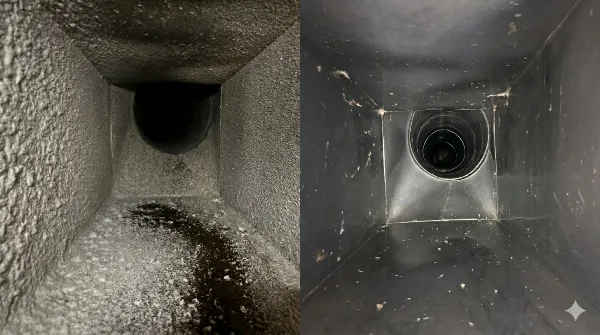
- A photo report, with before and after photos of the system, grease readings, the parts that were cleaned, any areas that couldn’t be reached and the recommended date for the next clean.
Together they show what was cleaned, when, by whom and what condition the system was left in. Keep both with your fire safety records.
We send both after the clean, so you don’t have to chase them. If you manage several sites, each site gets its own certificate and report. If an insurer, fire officer or EHO asks to see them, you’ll have everything in one place, with the photos to back it up.
Our accreditation, in exact terms
We are a BESCA Vent Hygiene Elite member, cleaning to BESA TR19® Grease. The Vent Hygiene Elite scheme is run by BESCA, and BESA describes it as the UK’s largest independently audited scheme for kitchen extract cleaning (BESA: kitchen extract system cleaning). BESA writes the TR19® specification; it doesn’t certify individual firms. So be wary of any contractor that claims BESA or TR19 has certified them. The right question is whether they’re a member of the scheme and can issue certificates through it.
We also hold CHAS, SafeContractor and ISO 9001, and we’re fully insured. See our accreditations.
What the photo report shows
- Photos of each part of the system before and after cleaning: canopy, plenum, filters, ductwork, risers, fan and discharge.
- Grease readings taken at set points, by Wet Film Thickness Test (WFTT) or Deposit Thickness Test (DTT).
- A clear list of any sections that couldn’t be reached and why, with any access panels recommended.
- The date of the clean, the location and the technician.
- The recommended next clean date.
BESA says certificates should record the date, location and technician, and be kept in the maintenance log (BESA: ventilation hygiene standards).
The photos are taken from the same access points each time, so you can compare one clean with the next. Over a few cleans, that shows how fast grease builds up in your system and helps confirm the cleaning interval is right. Readings and photos together are much stronger evidence than a certificate on its own.
How to check a contractor
Before you book any kitchen extract clean, check the contractor is listed. BESA’s Vent Hygiene Register has a find a VHR contractor search, and you can read about the register on the BESA site. Then ask:
- Will the certificate be issued through the scheme?
- Will I get before and after photos of every section?
- Will any areas you can’t reach be listed on the report?
- Will you take grease readings and recommend the next clean date?
Our contractor checklist has more.
Red flags on a certificate
- No photos, or photos of the canopy only.
- No mention of the ductwork, fan or discharge.
- No areas listed as inaccessible, on a system where you know some parts are hard to reach.
- No grease readings and no recommended next clean date.
- Claims that BESA or TR19 has certified the contractor, in place of scheme membership.
If you’re not sure about a certificate you already have, post-clean verification can check it against the system.
Why it matters to insurers and inspectors
TR19® is not law. It is BESA’s specification and the benchmark many insurers, fire officers and EHOs look to. Under the Regulatory Reform (Fire Safety) Order 2005, the responsible person must assess and reduce fire risk, and the certificate and photo report are the evidence that grease in the extract is being kept under control. Many insurers ask for proof of regular TR19 cleaning, and a claim can be refused or reduced without it. Our article on TR19 certificates covers this in more detail.
Keep certificates and reports for every clean, not just the latest. A run of records showing regular cleaning, at the right interval, tells a much clearer story than a single certificate. If you change contractor, keep the old records too. They are part of the system’s history. If you need an independent look at your records, see TR19 audits for insurers.
Near you
- London
- Brighton
- Southampton
- Portsmouth
- Reading
- Oxford
- Milton Keynes
- Guildford
- Chelmsford
- Maidstone
- Woking
- Crawley
Related
TR19 certificates and photo reports: common questions
Who issues your TR19 certificates?
We issue them through the BESCA Vent Hygiene Elite (VHE) portal. BESA now calls the scheme the Vent Hygiene Register (VHR).
Is Duct Doctor certified by BESA?
BESA doesn’t certify firms. We are a BESCA Vent Hygiene Elite member, cleaning to BESA TR19® Grease.
How can I check a contractor is genuine?
Search BESA’s find a VHR contractor page, and ask whether the certificate will be issued through the scheme with a full photo report.
What should the photo report include?
Before and after photos of each part of the system, grease readings, any areas not reached and the recommended next clean date.
How long should we keep certificates?
Keep them in your maintenance log or fire safety records, so you can show a history of cleaning. Check your insurer’s requirements too.
Do you issue certificates for canopy-only cleans?
A TR19 certificate covers the system that was cleaned. A canopy-only clean doesn’t cover the duct and fan, so we’ll tell you before we start exactly what the paperwork will and won’t cover.
Page updated 30 October 2026