Isle of Wight · Fire damper testing
Fire damper testing in Barton, Isle of Wight
Specialist fire damper testing for Barton: a survey, a fixed price, careful work and proper paperwork. Ask us for a fixed quote.
- Fire dampers that haven’t been tested for over a year
- Dust or grease build-up on damper blades
- Fire dampers nobody can get to
Fire dampers in Barton buildings
There are about 17 schools, colleges and universities, about 17 caring premises (care homes, nurseries and hospitals) and about 6 hotels, B&Bs and guest houses on the FSA’s food hygiene register within about 1.5 miles of central Barton. Schools, care settings and hotels are the kind of buildings where fire dampers are commonly found. Hampshire and Isle of Wight Fire and Rescue Service covers Barton. When a fire safety officer audits a non-domestic building, maintenance of systems like dampers can come up. For Barton, the closest hospital is St Mary's Hospital, roughly 0.9 miles north-west. Hospitals are a good example of a building with fire dampers across many floors and departments.
Historic houses near Barton, with Carisbrooke Castle about 1.6 miles south-west, are a reminder that older buildings can hold dampers in unexpected places. Healthcare buildings such as St Mary's Hospital (about 0.9 miles north-west) rely on fire compartments, and the dampers in them need testing at least annually.
Barton is about 1 mile east of Newport, in the Isle of Wight. Whatever kind of site you run in Barton, we can take on fire damper testing. Visits can be booked for evenings, overnight or weekends so trading isn’t interrupted. 125 places in the Isle of Wight are on our list, from busy centres to quieter spots. You can also see our page for Portsmouth, about 12 miles away.
Work in PO30, PO31 and PO41 follows the same survey, fixed quote and written report as everywhere else we cover. Streets in the area include Pan Lane, Ash Road and Chain Lane, and we cover them all for fire damper testing. Close by, we work in Cross Lane (1 mile north), Staplers (1 mile east), Fairlee (1 mile north), Hillgrove (2 miles north-east) and Whippingham (3 miles north). We also work in nearby towns such as Ryde (6 miles east), Cowes (4 miles north), Sandown (6 miles south-east), Shanklin (7 miles south-east), Ventnor (8 miles south-east) and East Cowes (4 miles north). As one of the bigger places in the Isle of Wight, Barton has commercial sites of every size, all within our area for fire damper testing. If your site is somewhere remote, the visit takes a little more planning, so mention it when you ask for a quote.
Landmarks near Barton
Locally, jobs take us to businesses close to Medina College, Island Innovation VI Form Campus and Bargeman's Rest pub and the streets around them. A little further out are Carisbrooke Castle (1.6 miles south-west) and Isle of Wight Bus & Coach Museum (under half a mile north-west). Open spaces near Barton include Mill Hill and Briddlesford Nature Reserve.
About our fire damper testing in Barton
BESA guidance is that fire dampers should be tested by a competent person when they’re installed and at least annually after that. For spring-operated types, annual testing is the minimum. We carry out fire damper testing for buildings in Barton and give you the records to show it’s been done. Typical jobs include dampers hidden with no access panel or hatch and fire dampers that fail to drop shut, across motorised smoke dampers, wall and floor dampers and hospitals and care homes.
In smaller places like Barton, dampers are often in the ductwork serving kitchens, plant rooms and escape routes. We plan the work around the people using the building.
The report is your system’s health record: a dated account with pictures of everything we did. Grease extract cleans are also certificated to TR19® Grease through the BESCA VHE portal and sits alongside the report.
- Place
- Barton (PO30, PO31, PO41)
- Wider area
- Isle of Wight
- Reporting
- Written report with pictures
- Price
- Fixed quote, normally within a working day
- Hours
- Out of hours as standard, 24/7 emergency line
- Phone
- 0345 646 2711
- Checked
- 30 October 2026
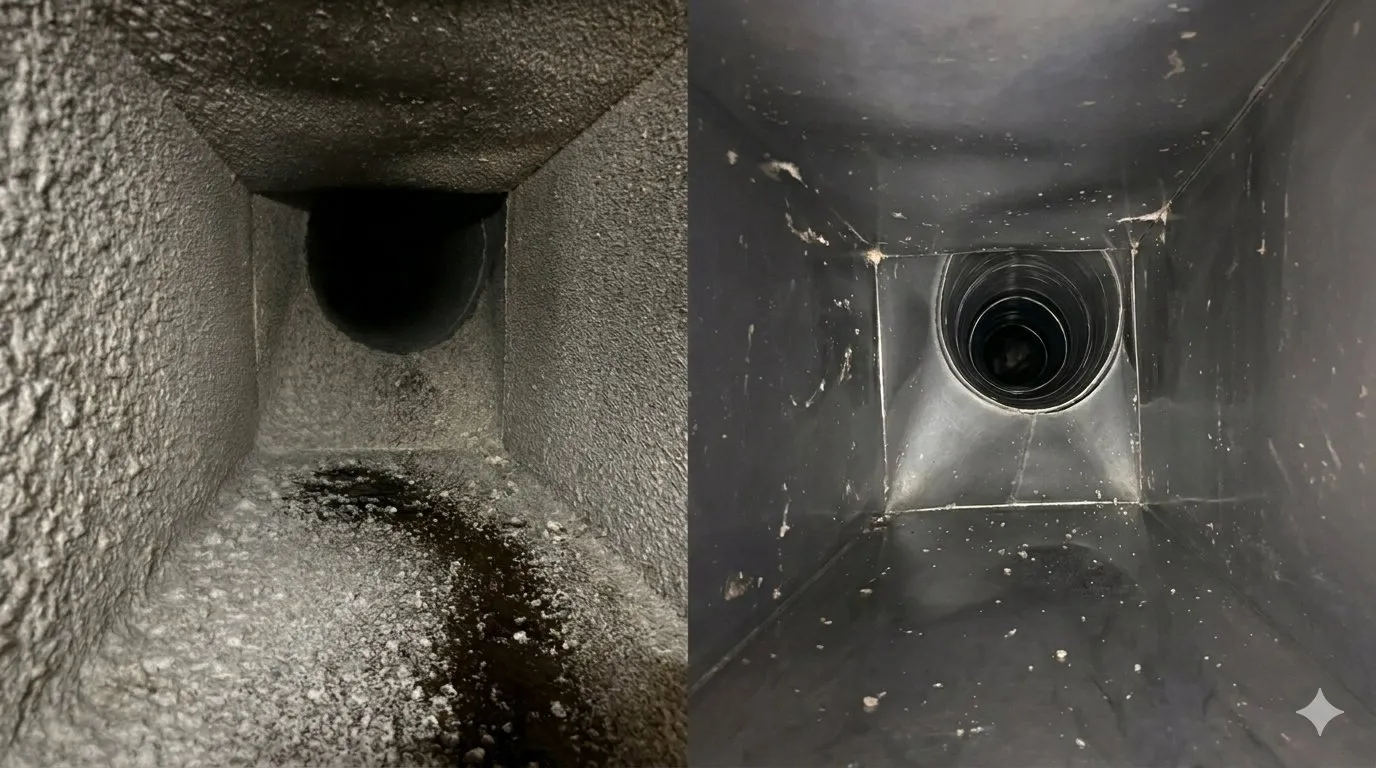
Common problems we fix in Barton
Rust is a frequent reason a damper will not close. Water leaks, condensation and damp plant areas attack the casing, blade and spring, so a damper can seize without anyone noticing.
If you notice any of these, it’s worth a diagnosis:
- Fire dampers that fail to drop shut
- Fire dampers nobody can get to
- Rusted damper blades and springs
- Dampers flagged on a fire risk assessment
If you manage a school site such as Barton Primary School, any fire dampers can be tested in the holidays.
What to look for in a quote
- What records you’ll receive afterwards
- If they look at the system before pricing
- How VAT is shown on the quote
- What insurance they carry
Keeping the system healthy
Good habits slow the build-up between visits. A few tips:
- Book the next test before the year runs out
- Warn anyone working in ceiling voids about the dampers
- Act on failed dampers rather than leaving them on file
- File every damper report where your assessor can find it
Pass the report to whoever keeps your fire risk assessment up to date, so the assessment reflects where the dampers stand. Outstanding faults should be dealt with, not left on file.
Keep a damper register: where each damper is, what kind it is and when it was last tested. It means nothing gets forgotten when staff or contractors change.
What affects the cost of fire damper testing
Your quote is based on your site. We consider:
- The size of the system
- Any permits to work or inductions
- Where the site is and how we reach it
- A single visit or a regular plan
One small site or a whole estate, the quote is built the same way: the work involved, the access and the timing. The price is fixed before any work starts.
What we need to know
When you call or email, these details help:
- Your last certificate, test record or report
- Problems your staff have spotted
- The roof, plant room or outside wall the system runs to
- A few general shots of the system
Every quote begins with a look at the system, from your photos and details or, where that isn’t enough, a survey on site. After that, you get a fixed price for the work so you know the cost before any work starts.
What staff can safely do
If your staff spot something between visits, like drips, unusual noise, smells or damaged filters, it’s best reported rather than tackled in-house. We’ll take a look and send you a fixed quote.
Staff cleaning and specialist work aren’t the same thing. A daily filter wipe and a weekly filter wash keep grease down at the front of the system, but they do not reach the grease that builds up further in. Reaching it takes a specialist with the right equipment.
Managing agents and facilities teams in Barton
Whether it’s one building or many, the standard is the same: the system surveyed, the price fixed, the visit fitted around trading and everything written up afterwards.
If you look after several sites, we can schedule visits across all of them on one quote. Every building has its own written report, so records stay tidy.
When something else is needed
A few issues sit outside what this work can do:
- Gaps in the wall or floor around the damper
- Ductwork crossing a fire wall with no damper fitted
- Fire risk assessments, which need a fire risk assessor
If in doubt, ring 0345 646 2711 or use the quote form and we will say what we think.
What the work covers
- Offices and schools
- Motorised smoke dampers
- Fusible link fire dampers
- Hospitals and care homes
- Riser dampers
- Wall and floor dampers
Places near Barton
What else we do in Barton
What we do, step by step
Before we leave, we walk the area with whoever is on site. Anything we couldn’t reach or that needs attention is pointed out there and then, and it goes on the report too. All told, the work takes a few hours for a single floor, with bigger buildings phased over more than one visit. A site near Barton typically has room to park, so the questions are about access to the system and your hours.
- Before the visit, we agree access, timings and any areas with restrictions.
- We open up ceilings and hatches and take off each access panel.
- The blade is released and watched to make sure it closes fully.
- We reset it and record any dirt, corrosion or damage.
- Panels and tiles go back, and the results are written up.
Preparing for the visit
- Let us know when the site is closed or quiet
- Arrange a key holder or contact on site
- Tell us about site rules, permits or sign-in
Ask for a quote
Quotes are quick. Call or email with a few details and you’ll typically have a fixed price within one working day. If we need to see the system first, we book a survey around your hours.
Read more
Barton: your questions answered
Do you work in villages like Barton?
Yes, we work in villages as well as towns, and Barton is covered. Photos of the system and directions to the site help us plan the visit.
Can you come to Barton after we close?
Yes, evening, overnight and weekend work is normal for us. The work in Barton can fit around your hours. Just ring 0345 646 2711 or send us an email with your opening times and we’ll plan around them.
Does the law say we must follow TR19?
No, not in itself. TR19® is the benchmark insurers, fire officers and EHOs check against, and many insurance policies ask for proof of TR19® cleaning. The legal duty sits in the Regulatory Reform (Fire Safety) Order 2005, which applies in England and Wales.
What does TR19 mean?
BESA’s ventilation hygiene specification, with two parts that matter most here: TR19® Grease for kitchen extract systems and TR19® Air for general ventilation. It is not legislation, but it’s the standard people check against.
Do you certify fire dampers?
The record we give you is a report of the tests for every damper on the visit. Any failures come with a note of the remedials needed.
What happens to the waste?
It’s contained and taken away. Grease, debris and waste water are collected as the work goes on rather than letting it spread.
What accreditations do you have?
Duct Doctor is a BESCA Vent Hygiene Elite member, cleaning to BESA TR19® Grease. We also hold CHAS, SafeContractor and ISO 9001, and we carry full insurance.
Whose job is it to make sure fire dampers are tested?
The duty falls on the responsible person for the premises. That’s often the employer, owner, landlord, facilities manager or managing agent. We carry out the testing and give them the records.