East Sussex · Kitchen extract cleaning
The Pound kitchen extract cleaning
Professional kitchen extract cleaning in and around The Pound, timed so the site keeps working and finished with a written report and pictures.
- Grease smells coming from the extract
- A new tenancy or takeover with no cleaning history
- A smoky, hot kitchen with weak extraction
Kitchen extract cleaning for kitchens and businesses in The Pound
A closed kitchen isn’t earning, so the timing of a clean matters. We work evenings, overnight and at weekends, or between services where the kitchen has a gap. Equipment is switched off and left to cool, the area is sheeted, and the kitchen is handed back ready to cook. We are often asked to deal with poor airflow at the canopy and fat running down the canopy edge, across extract fans, discharge points and canopies and hoods. Hood cleaning is where most enquiries from The Pound start: a system that’s clean inside, not just on the surface, and a certificate that proves it.
Before we clean, we look at where the grease is: grease readings at set points tell us where the heaviest deposits are, and readings afterwards go into your report.
In a small place like The Pound, kitchens are often in older or extended buildings, with long single-storey duct runs, where grease settles in the flat sections. Access, parking and timings are agreed before the day.
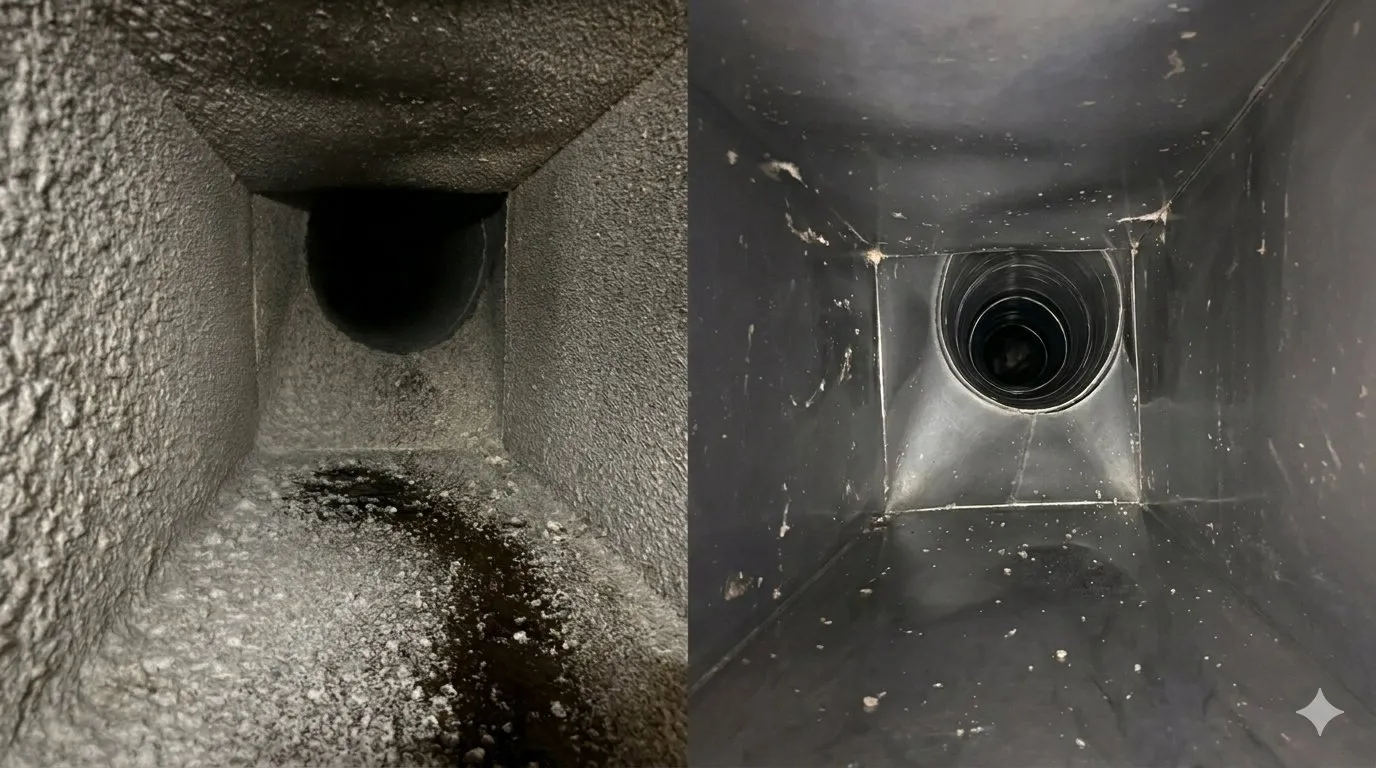
For insurers and inspectors, the record counts. So every job comes with a written report and pictures, and grease extract cleans come with a TR19® certificate issued through the BESCA Vent Hygiene Elite portal.
- Location
- The Pound (TN33)
- Region
- East Sussex
- Reporting
- Certificate and photo report
- Quotes
- A fixed price before work begins
- Working hours
- Out of hours as standard, 24/7 emergency line
- Phone
- 0345 646 2711
- Updated
- 30 October 2026
For landlords and multi-site operators
We work for landlords, managing agents and facilities managers as well as the people running the site. Shared systems, like a riser serving several units, need a clear agreement on who books the work, and we can quote for the whole system.
Records are where multi-site compliance often slips. Each visit ends with a dated report and photos, so you can show an insurer or inspector what was done at each site.
What kitchen extract cleaning can’t fix
We will always give you a straight diagnosis, so here’s what kitchen extract cleaning will not do:
- A fan motor that has burnt out
- Extraction that can’t cope with the cooking because of its design
- Ductwork that is corroded, split or leaking (that’s for a ductwork contractor)
If you’re not sure, just give us a ring on 0345 646 2711, or send details by email and we will give you a straight answer.
What the work covers
- Discharge points
- Horizontal duct runs
- Plenums and filters
- Extract fans
- Vertical risers
- Canopies and hoods
What happens on the day
We start by comparing what we find with the survey or your pictures. If anything is different, we talk it through with the person on site before carrying on. After that, the work takes as long as the system needs, from a few hours to several planned visits. In a small place like The Pound, the journey is planned ahead and the visit arranged around the site’s hours.
- We survey the system, from your photos or on site, canopy to discharge.
- We take grease readings at set points and send you a fixed quote.
- On the night, the equipment is off and cool and the kitchen is sheeted.
- We work through the system from the canopy to the fan and discharge.
- Readings are repeated, photos taken, and your TR19 certificate and photo report issued.
How to prepare
- Mention any locked doors, roof access or ceiling voids
- Tell us about site rules, permits or sign-in
- Name a contact who can let us in at the agreed time
Getting a quote
Quoting starts with a diagnosis, from your pictures and details or, where that isn’t enough, a survey on site. After that, you get a fixed price for the work, before work begins.
Advice
How the job changes from site to site
Grease filters
Between TR19 cleans, filters still need regular cleaning and we offer a filter exchange service for that. Clean filters slow the build-up further down the system.
Canopy and plenum
Whether it’s one hood or a long island canopy, each section is cleaned and photographed before and after.
Nearby places to The Pound
Other services in The Pound
The Pound: your questions answered
Who would carry out a food hygiene inspection at a kitchen in The Pound?
That’s Rother council, whose environmental health officers carry out food hygiene inspections in The Pound. Ratings are published by the Food Standards Agency, so a clean extract and good records are worth keeping up.
Which fire and rescue service is responsible for The Pound?
East Sussex Fire and Rescue Service is the fire and rescue service for The Pound. Records of extract cleaning are a sensible thing to have ready if a fire safety officer carries out an audit.
How often does a kitchen extract system need cleaning?
The minimum is set by BESA guidance on daily use, from 3-monthly to 12-monthly. Heavy frying and grilling can mean shorter intervals, and readings will tell you.
Do we have to close the kitchen for the clean?
Cleans are timed to avoid service. Most kitchens book us overnight or at weekends and the kitchen is ready to cook when we leave.
What about areas you can’t get to?
The report shows them clearly. Often the fix is extra access, such as new panels in ductwork, which we can install.
Do you clean the whole extract system or just the canopy?
The whole system: the canopy, the plenum behind the filters, the filters, horizontal ducts, vertical risers, the fan and the discharge, plus attenuators where fitted. Any part without access is noted.
Can we book visits on a schedule?
Yes. Regular plans can run on 3, 6 or 12-monthly cycles, to suit the system and how it’s used.
Are you a BESCA Vent Hygiene Elite member?
We’re a BESCA Vent Hygiene Elite member, cleaning to BESA TR19® Grease. CHAS, SafeContractor and ISO 9001 sit alongside that, and we’re fully insured.
What affects the quote in The Pound
There’s no set price list, because sites vary so much. What we look at:
- The number of sites or systems
- One-off work versus a regular cycle
- What state the system is in
- Any permits to work or inductions
What you pay depends on the size of the system, what state it’s in and access to every part of it. You get a fixed price before any work starts, so there are no surprises.
Helping us quote
To help us quote quickly, send us:
- When the site is open and when it’s quiet
- The roof, plant room or outside wall the system runs to
- The postcode and the type of business
- Photos showing the whole system and its surroundings
Quotes are quick. Send a few details and pictures, and we typically reply with a fixed quote within one working day. If we need to see the system first, we book a survey around your hours.
What happens if it’s left?
TR19® isn’t law, but the Regulatory Reform (Fire Safety) Order 2005 is. The responsible person must assess and reduce fire risk, and in a kitchen that means keeping extract grease under control. TR19 is the benchmark insurers, fire officers and EHOs look to. It’s simpler to plan the work at The Pound now than to arrange it in a hurry later.
Several systems or sites on one quote often makes better use of the time. Mention every system or site you need covered and we will price it together.
Why The Pound businesses choose us
- Out-of-hours work and a 24/7 emergency line
- Fully insured
- CHAS and SafeContractor accredited, with ISO 9001
- A fixed price before any work starts
Take a look at how cleaning jobs are priced and how to check a contractor.
Grease, kitchens and The Pound
The Pound, about 46 miles from central London, is within our usual area. Visits are booked around your hours, evenings and weekends included. The Pound sits within the area of East Sussex Fire and Rescue Service. Its fire safety officers can audit commercial kitchens, and grease in the extract is part of a kitchen’s fire risk.
A hospital like Bexhill Hospital, about 5.2 miles south-east, is the kind of site where a kitchen may cook for patients, staff and visitors all day. Where a hall near Parish Church of St Peter, or anywhere in The Pound, hosts lunch clubs or events, its extract gathers grease just as a café’s does.
The Pound is about 5 miles north-west of Bexhill-on-Sea, in East Sussex. Every kind of commercial site in The Pound, kitchen extract cleaning is something we can help with. We can work out of hours so trading is not interrupted. We cover 289 places across East Sussex, large and small. We also work in Brighton, around 23 miles away.
We cover every part of the TN33 postcode area for kitchen extract cleaning and the roads nearby. That includes premises on Church Road and Linghams Lane and the roads around them. If your site is just outside The Pound, we cover Ashburnham (1 mile north), Brownbread Street (1 mile north-west), Bodle Street Green (2 miles west), Wood's Corner (3 miles north) and Trolliloes (3 miles west). We also work in nearby towns such as Eastbourne (9 miles south-west), Hastings (8 miles east), Bexhill-on-Sea (5 miles south-east), Seaford (15 miles south-west), Hailsham (7 miles south-west) and Crowborough (14 miles north-west).
Landmarks near The Pound
In The Pound, that means kitchens and buildings near Ashburnham Park and The Ash Tree Inn, among other places. The closest station to The Pound is Battle station, roughly 4.5 miles east. Other landmarks nearby include Bexhill Hospital (5.2 miles south-east) and Herstmonceux Castle (3.3 miles south-west). Green spaces nearby include Senlac Hill.
Looking after it afterwards
Think of this as the after-treatment advice, in brief:
- Empty any grease troughs or cups on the canopy
- Flag any change in how the extract sounds or works
- Clean grease off the canopy surfaces regularly
- Switch the fan on before cooking starts
A TR19 certificate notes the date, the location and the technician. Keep it in the maintenance log with your fire risk assessment, so it’s to hand when an insurer, fire officer or EHO asks.
Tell whoever looks after the system when something changes. Drips, odours and fan noise often mean grease is building, and a grease thickness test can confirm it.