Medway · Fire damper testing
Fire and smoke damper testing in Grain
We cover Grain for fire damper drop testing and smoke damper testing, with a record for each damper. Out-of-hours visits, a fixed quote and a written report with photos as standard.
- Blades that jam part-way when released
- Dust or grease build-up on damper blades
- Missing or out-of-date damper records
About our fire damper testing in Grain
The idea behind drop testing is straightforward: the blade is released, checked for a full close and reset. We test dampers for sites in Grain and the rest of Medway, keeping a log for each damper so there’s a history to look back on. If you have corroded dampers in damp risers and plant rooms and fire dampers that fail to drop shut, we can help.
In a village or hamlet like Grain, there may be only a few buildings with fire dampers. Wherever there are dampers, each one needs testing at least annually.
The paperwork matters as much as the work. You get a written report with pictures after every visit, listing what was done, anything we couldn’t reach and when the next visit is due. File it in your maintenance log so it’s ready for an insurer, fire officer or EHO.
- Place
- Grain (ME3)
- Wider area
- Medway
- Reporting
- Report and photos after the visit
- Quote
- Fixed quote, normally within a working day
- When we work
- Out of hours as standard, 24/7 emergency line
- Phone
- 0345 646 2711
- Reviewed
- 30 October 2026
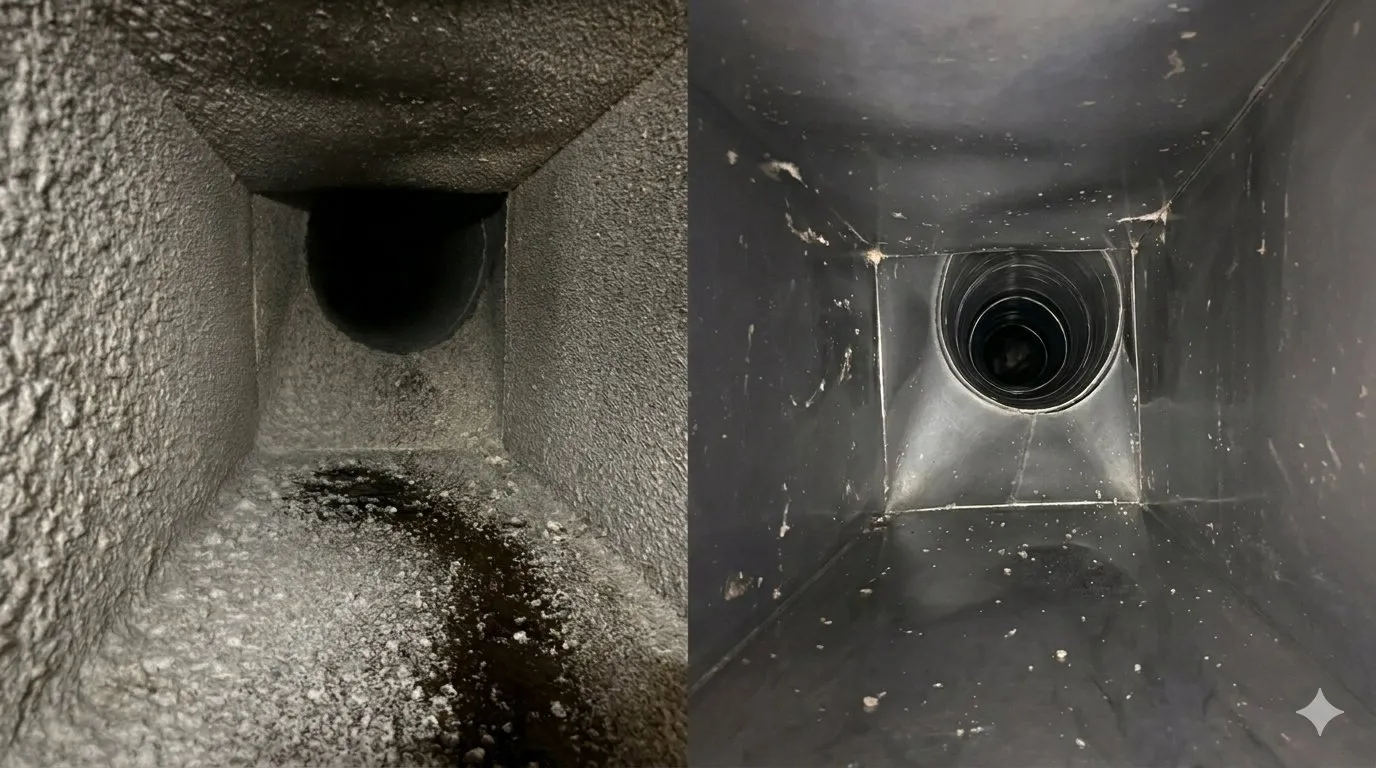
What we are called out for in Grain
Under the Regulatory Reform (Fire Safety) Order 2005, the responsible person has a duty to keep fire safety measures working, and dampers are part of those measures. Whoever that is, whether employer, owner, landlord, facilities manager or managing agent, needs to be able to show the dampers work.
What we are most often called out for:
- Dampers clogged with dust or grease
- Buildings with no damper register
- Damper actions from a fire risk assessment
- Smoke dampers with no recent test
Drop testing in and around Grain means releasing each blade, watching it close and resetting it.
Comparing quotes
- Proof of accreditation you can verify
- When the next visit should be, and why
- What records you will receive afterwards
- How areas they cannot reach will be recorded
Between visits
After the visit, a few habits help the work last:
- Keep ceiling hatches and duct panels easy to open
- Fix water leaks in plant rooms and risers promptly
- Close off damper faults promptly
- Update the register when ductwork changes
Failed dampers are set out separately, each with the fault we found, and we can quote for remedials. Once the work is done, the damper is tested again and the record updated.
Clean ductwork means less dust and grease reaching the dampers. Duct cleaning and damper testing can be planned side by side.
Part by part
Ceiling voids and risers
Plant rooms and risers can be damp, which leads to corrosion. Signs of corrosion or water are recorded so it can be dealt with.
Access panels
If we cannot reach a damper, it goes on the report as inaccessible. Fitting a panel means it can be tested on the next visit.
Landlords, agents and facilities managers
Facilities teams in offices, schools and healthcare sites book us too across Medway. Work can be phased by floor, building or site to keep disruption down.
We regularly work with managing agents. Send the address, what’s needed and how access works, and we will send a fixed quote.
Your questions about fire damper testing in Grain
Will you come out to Grain?
Yes, we work in villages as well as towns, and Grain is covered. A survey first, from photos or a visit, means we arrive with the right kit.
Does coastal air change anything about fire damper testing in Grain?
It can, as Grain is within about 1 mile of the sea, where salt in the air is hard on metal. Corroded dampers are recorded at the test, as corrosion can stop a blade dropping.
How often should fire dampers be tested?
BESA’s guidance is a test on installation and at least once a year after that. Some sites choose to test more often where the risk is higher.
What if a fire damper will not close?
It’s listed on the report as a fault and we quote for remedials. After the repair, we test it again so the record shows a pass.
Whose job is it to make sure fire dampers are tested?
The Regulatory Reform (Fire Safety) Order 2005 puts it on the responsible person. Annual testing by a competent person, with written records, is a practical way to show the duty is being met.
How do you keep the site clean during the work?
We cover floors and nearby surfaces with sheeting before any work starts, and waste is contained as we go. Before we leave, we tidy up and clean down.
How long will damper testing take?
Testing takes anything from a couple of hours for a handful of dampers to a full day for a large building. Bigger sites can be phased, and you can call us on 0345 646 2711, or email photos to talk it through.
What’s TR19?
TR19® is BESA’s specification for ventilation hygiene. Since 2019, TR19® Grease has been a standalone specification for grease in kitchen extract systems, while TR19® Air covers other supply and extract ductwork.
What your team can do, and what needs us
Your own staff can handle the daily basics: wiping down canopy surfaces, cleaning filters and keeping a simple log. What they cannot safely do is clean inside the ductwork, the fan or the risers, and that’s where we come in.
Some jobs should never be done in-house: opening up ductwork, cleaning fans, drop testing fire dampers and measuring grease call for the right kit, training and safe access. That’s our job.
Places near Grain
What else we do in Grain
What fire damper testing can’t fix
An honest diagnosis matters more to us than a booking, so here’s what fire damper testing will not do:
- Faults in the alarm or building controls that signal smoke dampers
- Fire-stopping gaps around the duct where it passes through the wall
- Deciding where dampers should be fitted
If you are not sure, just call 0345 646 2711 or send us an email and we’ll give you a straight answer.
What we work on in Grain
- Fusible link fire dampers
- Wall and floor dampers
- Riser dampers
- Hospitals and care homes
- Motorised smoke dampers
- Offices and schools
What fire damper testing looks like in Grain
The coast is only about 1 mile from Grain. Dampers close to louvres and air intakes can corrode in sea air, and a corroded blade may not drop. We cover Grain, about 35 miles from central London, as part of our work across London and the South East. Evening, overnight and weekend visits are all possible. Grain sits within the area of Kent Fire and Rescue Service. Under the Fire Safety Order, the responsible person has to keep fire safety systems, dampers included, in working order, and the fire authority enforces that in most non-domestic premises.
For schools like St James Church of England Primary Academy, damper testing is easiest in the holidays, when corridors and ceilings are clear.
Grain is about 5 miles north-west of Minster, in Medway. Whether your site is in the middle of Grain or further out, we cover fire damper testing for every kind of premises, from a single unit to a large public building. 68 places in Medway are on our list, large and small. There’s also a page for Maidstone, roughly 15 miles from Grain.
Fire damper testing in ME3 is surveyed, quoted and booked the same way as anywhere else. Local streets include High Street, Power Station Road and Chapel Road, and we cover them all for fire damper testing. We also cover Wallend (1 mile west), Blue Town (2 miles south-east), Sheerness (2 miles south-east), Queenborough (3 miles south-east) and Rushenden (3 miles south). We also work in nearby towns such as Gillingham (8 miles south-west), Chatham (10 miles south-west), Rochester (10 miles south-west), Rainham (8 miles south-west), Strood (11 miles south-west) and Luton (10 miles south-west).
Around Grain
In Grain, that means kitchens and buildings near The Hogarth Inn and the streets around them. The nearest railway station is Sheerness-On-Sea station, about 2.1 miles south-east. Well-known places in the area include Bluetown Heritage Centre (1.8 miles south-east).
How it works
We work around your opening hours, not the other way round. We book the visit for a time the area is closed, whether that’s an evening, overnight or a weekend. Once we’re in, the area is sheeted and anything that has to be off is turned off and cooled, and the job takes a couple of hours for a few dampers, and a day or more across a big site. In a small place like Grain, the journey is planned ahead and the visit arranged around the site’s hours.
- We go through the damper schedule and any previous faults.
- Each damper is found and checked for access.
- We test fire dampers by dropping them and smoke dampers by operating them through the controls.
- Passes are reset and any failures recorded with the reason.
- The report sets out the results, and we can quote to repair or replace failed dampers.
How to prepare
- Clear loose items from the work area
- Dig out any earlier paperwork for the system
- Make sure equipment near the work can be switched off and left to cool
Ask for a quote
Every quote begins with a look at the system, either from pictures and details you send or from a site visit. Then we send a fixed price so you know the cost before we start.