Slough · TR19 inspections and grease testing
TR19 inspections and grease testing in Wexham Street, Slough
Our technicians work in Wexham Street on TR19 inspections, grease thickness testing, pre-clean surveys and post-clean verification. Fixed quotes, work around your opening hours and photo reports as standard.
- Kitchens whose menu or hours have changed
- Missing TR19 certificates or history
- Extracts that may be over the 200 micron mean
How we handle TR19 inspection in Wexham Street
Insurance policies often require evidence of TR19® cleaning and inspection. Without it, a claim can be refused or reduced. Our TR19 audits give sites in Wexham Street and across Slough a clear record of the system’s condition. If you are dealing with an insurer’s request for a TR19 audit and post-clean verification after another contractor’s clean, we can put it right, from insurer audits, pre-clean surveys and wet film thickness tests onwards.
In a small place like Wexham Street, kitchens are often in older or extended buildings, with long single-storey duct runs, and those horizontal sections are where grease settles. Access, parking and timings are agreed before the day.
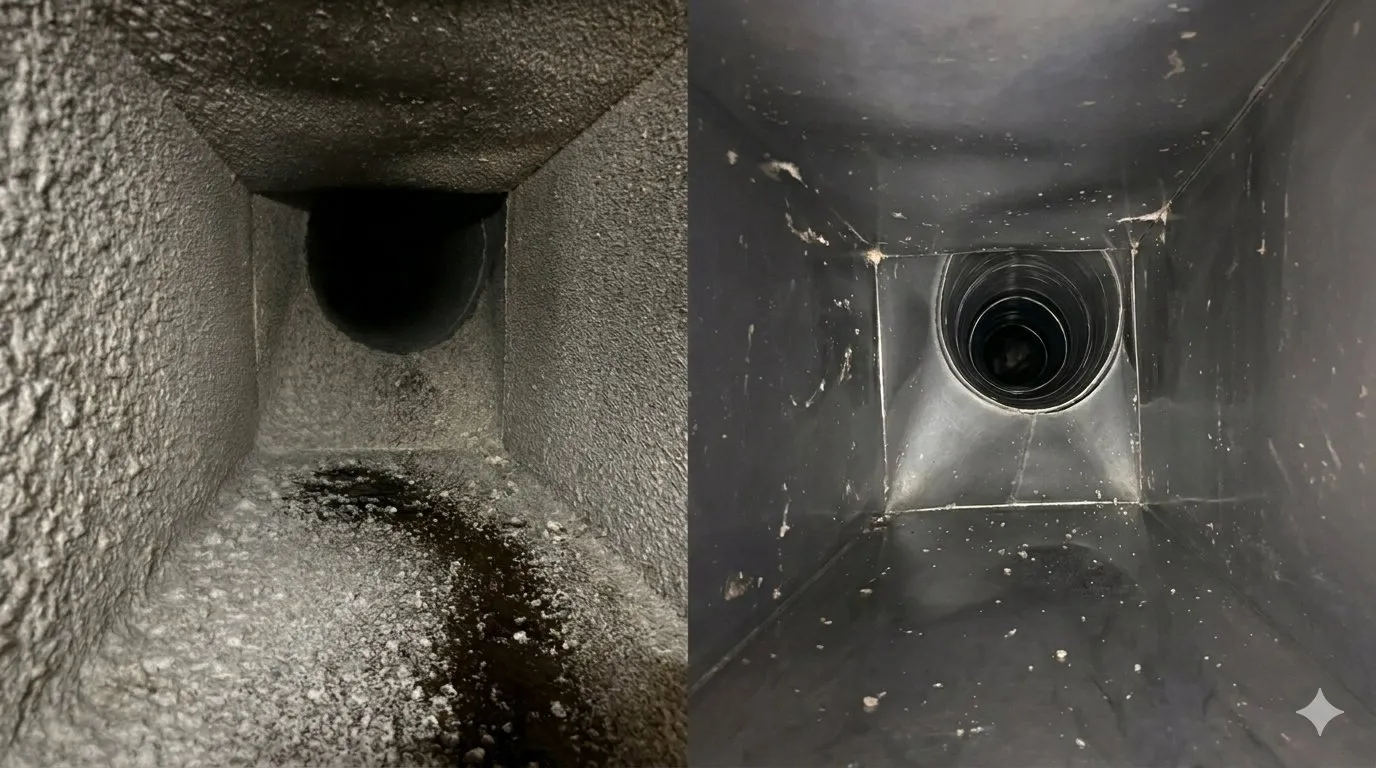
Nothing is signed off by word of mouth: a written report, dated and illustrated with photos, and for TR19® Grease cleans, a certificate issued through the BESCA VHE portal. Any parts we couldn’t reach are recorded on it too.
- Place
- Wexham Street (SL2, SL3)
- Wider area
- Slough
- Paperwork
- Certificate and photo report
- Quote
- Fixed quote, usually within a working day
- When we work
- When your site is closed, plus a 24/7 line
- Call
- 0345 646 2711
- Updated
- 30 October 2026
TR19 inspection around Wexham Street
Look up Wexham Street on the FSA’s food hygiene register and you’ll find about 11 cafés, restaurants and staff canteens across Wexham Street and its immediate surroundings (about a mile and a half). A WFTT or DTT reading tells each of those kitchens whether its grease is staying under the 200-micron mean. Food hygiene inspections in Wexham Street are the job of Buckinghamshire council’s environmental health team. An officer looking round a kitchen will see the canopy, and grease there is hard to miss. A dated certificate in the maintenance file answers the question before it’s asked. The fire and rescue service for Wexham Street is Royal Berkshire Fire and Rescue Service. Its fire safety officers can audit commercial kitchens, and grease in the extract is part of a kitchen’s fire risk.
School kitchens, at schools like Khalsa Secondary Academy for example, are typically cleaned in the holidays so no lunches are lost. Kitchens that cook twelve hours or more a day, as some healthcare kitchens do, fall into BESA’s three-monthly minimum; Wexham Park Hospital is the nearest hospital to Wexham Street, about 0.8 miles south.
Wexham Street is about 2 miles north-east of Slough, in Slough. Wherever you are in the SL2 postcode area, we can carry out TR19 inspection at your premises. Our Slough coverage runs to 31 places, Wexham Street among them. You can also see our page for Reading, roughly 19 miles from Wexham Street.
All of SL2 and SL3 is within our area for TR19 inspection, from busy streets to back roads. If you need TR19 inspection at premises on Larkings Lane, Hartley Close and Tubwell Road or anywhere close by, we can help. Neighbouring places we cover for TR19 inspection include Stoke Poges (1 mile west), Wexham Court (1 mile south), Fulmer (1 mile north-east), George Green (2 miles south-east) and Iver Heath (2 miles east). Within a short drive, we also cover Cippenham (3 miles south-west), Chalvey (3 miles south-west), Langley (3 miles south), Upton (3 miles south), Burnham (4 miles west) and Datchet (4 miles south).
Around Wexham Street
We work in commercial kitchens and buildings around The Plough Public House and The Stoke Poges School, among other places. Wexham Street’s nearest station is Slough station, about 2.3 miles south of the centre. A little further out are The Pavilions (4 miles east) and Windsor Castle (4.3 miles south). The countryside around Wexham Street includes Stoke Common.
Towns and villages near Wexham Street
More services for Wexham Street
Looking after it afterwards
How long the results last depends on use and care. Here’s what we suggest:
- Keep grease filters clean and fitted properly
- Clean grease off the canopy between professional cleans
- Keep access panels clear and unpainted
- Tell us if menus or opening hours change
You get a report with the grease readings, where they were taken and pictures of each point. Keep it with your fire safety and TR19 records.
Regular grease readings keep the cleaning interval honest. It spots changes in how fast grease builds.
What happens on the day
We work around your opening hours, not the other way round. We book the visit for a time the area is closed, whether that’s an evening, overnight or a weekend. When the team arrives, the work area is protected and the relevant equipment is switched off to cool, and the work takes anything from an hour for a small canopy and short duct to a good part of a day for a large site. Pictures of the system and its access let us plan the work in Wexham Street before we set off.
- After the clean, we arrange a time to check the system.
- The same access points are opened up.
- Grease readings are taken again at set points.
- We photograph each area to record how it was left.
- We report the findings and flag any areas that need more work.
Preparing for the visit
- Let us know when the site is closed or quiet
- Let us know about parking and loading
- Allow time for equipment near the work to be turned off and cool down
Get a fixed quote
There’s no standard price list, because no two systems are the same. Instead, we look at your site first, from photos or a survey, then send a fixed quote. To start, call 0345 646 2711, or send details by email.
Advice
What staff can safely do
Keep a record of what your team does. A dated log of in-house cleaning and checks helps show that the system is managed between specialist visits, next to our reports.
A few tasks are always specialist work: entering ducts, working on fans, testing dampers and taking grease readings need training, the right equipment and safe access. Leave those to us.
Signs you need TR19 inspection in Wexham Street
When a site in Wexham Street changes owner or cleaning contractor, the records don’t always follow. With no history, the current state of the extract is a guess.
Signs it’s time to call us include:
- Systems that need surveying before cleaning
- Heavy grease suspected in the plenum or ducts
- Cleaning intervals that may not suit the kitchen
- Checking the result of a recent clean
If you run catering at a historic house or estate in the area (Windsor Castle is about 4.3 miles south), event kitchens in older buildings often have awkward duct runs that need planning.
Comparing quotes
- Whether inaccessible sections are listed on the report
- How VAT is shown on the quote
- What hours they’ll be on site
- Exactly which parts of the system are covered
Questions from Wexham Street
Can a school canteen extract in Wexham Street be done out of term time?
Yes, out-of-term visits are normal for schools. With about 6 schools and colleges on the FSA’s register within roughly a mile and a half of Wexham Street, it pays to plan holiday dates ahead. Booking early in the term gives the best choice of holiday dates.
Who is the fire and rescue service for Wexham Street?
It’s Royal Berkshire Fire and Rescue Service, which covers Wexham Street. TR19® isn’t law, but it’s the benchmark many fire officers and insurers look to when they ask how often the extract is cleaned.
Do you have a 24/7 line?
Yes, day and night, every day of the year. Our office is open from 8am to 6pm on weekdays, with the emergency line covering every other hour.
At what point does grease need cleaning?
Two figures matter: a mean of no more than 200 microns between cleans, and 500 microns at any single point, which needs immediate spot cleaning. We show your readings against those figures.
Can we book visits on a schedule?
Yes. Tell us what you have and how it’s used, and we will suggest a schedule and quote for it.
Which kinds of sites do you work on?
We work for restaurants, pubs, hotels, schools, colleges, hospitals, care homes, offices and shops, plus food production and leisure sites.
Can you verify a clean after it’s been done?
It’s an inspection after cleaning, to show what state the system was left in, whoever did the clean.
What does TR19 mean?
BESA’s ventilation hygiene specification, with two parts that matter most here: TR19® Grease for kitchen extract systems and TR19® Air for general ventilation. It isn’t legislation, but it’s the standard people check against.
Leave it or put it right?
If there’s a fire or a claim, your insurer may ask for TR19 records. Without them, a claim can be reduced or refused. An up-to-date inspection report is a good place to start. A planned visit to Wexham Street is easier to arrange than an emergency callout.
Combining work into one visit or one programme can make for a more efficient booking. Tell us about everything you’d like looked at, and you’ll get one fixed quote.
Why us?
- Every job surveyed first
- Fully insured
- Work around your opening hours, with 24/7 emergency cover
- Each visit written up, with pictures
Take a look at what affects the cost and our accreditations and certificates.
Honest limits
Before you book, it helps to know what’s not included:
- Heavy deposits found on test, which still need cleaning
- Fire safety duties beyond the extract system
- Design faults in the extract system
If you are not sure, just call us on 0345 646 2711, or email photos and we will give you a straight answer.
Parts of the system we cover
- Access surveys
- Post-clean checks
- Pre-clean surveys
- Insurer audits
- Wet film thickness tests
- Deposit thickness tests
Landlords, agents and facilities managers
Running several sites is easier with one contractor. We work across London and the South East, so a run of sites can go into one programme and kept on a regular cycle.
Records are where multi-site compliance often slips. Each visit ends with a dated report and photos, so you can show an insurer or inspector what was done at each site.