Essex · Canopy and hood cleaning
Canopy and hood cleaning in Patching, Essex
Canopy cleaning for Patching and the surrounding area: diagnosis first, then a fixed quote, the work and a report with pictures. Ask us for a fixed quote.
- A greasy hood noticed by an inspector
- Grease dripping from the canopy edge
- Greasy streaks across the canopy
When it’s something else
A few issues sit outside what this work can do:
- Grease filters too damaged to refit (they need replacing)
- A light fitting that doesn’t work
- A hood that doesn’t cover the cooking line
If you’re not sure, just call 0345 646 2711 or send us an email and we will give you a straight answer before you book.
Where we work
- Canopy light fittings
- Baffle filters
- Island canopies
- Grease gutters
- Wall canopies
- Plenum chambers
Canopy cleaning for kitchens and businesses in Patching
Think of the canopy as the mouth of the extract. A dirty canopy passes more grease further into the system. We start the check-up there, and the treatment is a thorough degrease of the hood, plenum and housing. The work covers wall canopies, island canopies and canopy light fittings, and people most often call us about filters that never seem to stay clean and wet, greasy drips from the hood.
Size doesn’t change the work: a kitchen in a place like Patching gets the whole system cleaned, canopy to discharge. We plan the visit around your hours, with the journey sorted in advance.
Good records are part of the job. You get a written report with photos after every visit, covering the work done, any areas we couldn’t access and a recommended next date. File it in your maintenance log so it’s to hand when an insurer or inspector asks.
- Where
- Patching (CM1)
- Wider area
- Essex
- Records
- TR19® certificate and photo report
- Price
- Fixed quote, normally within a working day
- Working hours
- Nights, weekends or holidays to suit you
- Phone
- 0345 646 2711
- Checked
- 30 October 2026
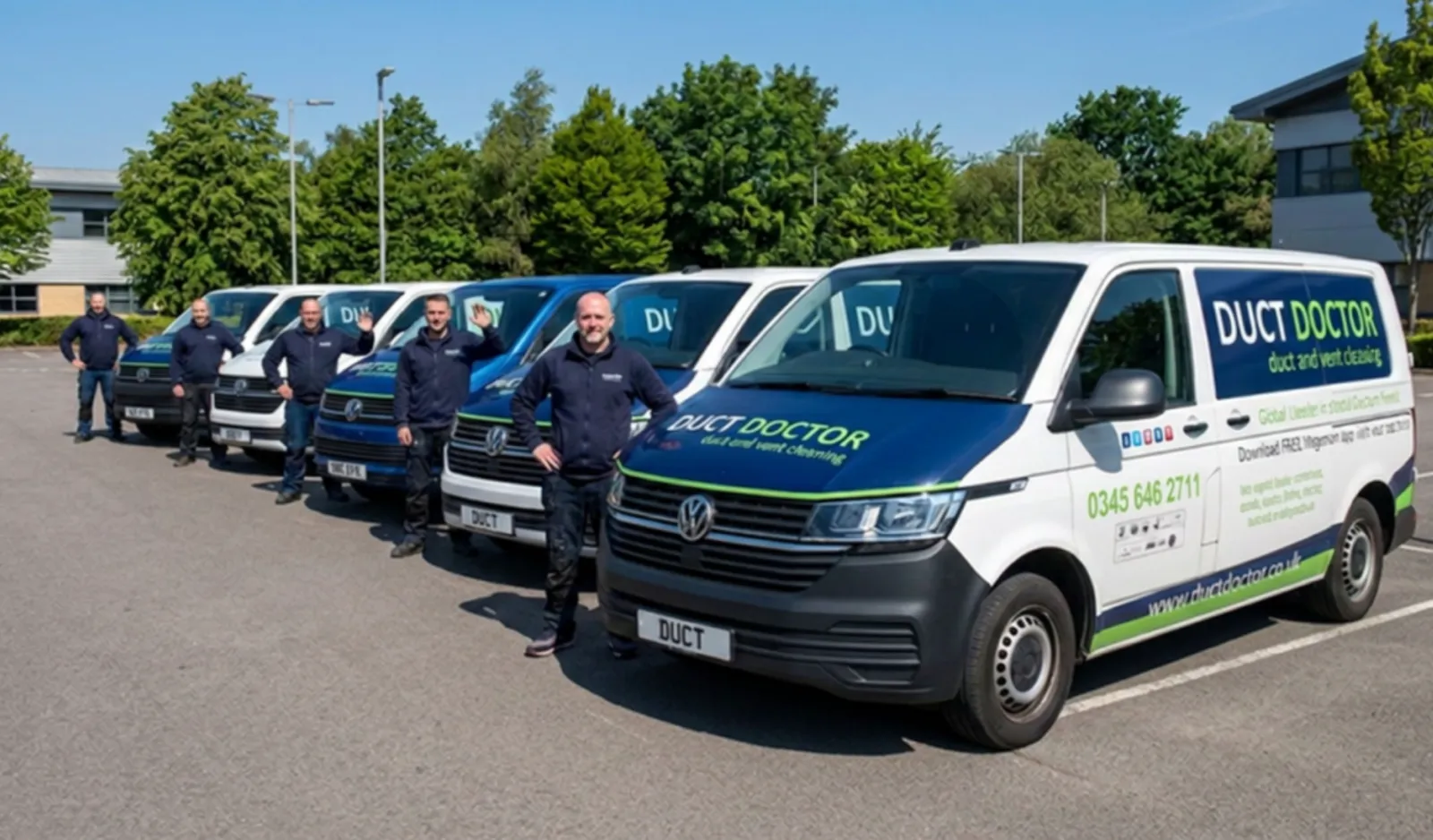
What we’re called out for in Patching
A canopy in Patching picks up grease at much the same rate as one anywhere else with the same cooking: the hours and the type of cooking decide how fast. High-heat cooking coats it fastest.
What we are most often called out for:
- Fat running down the front of the hood
- A greasy hood noticed by an inspector
- Condensation running down the canopy
- Heavy deposits behind the grease filters
If you run catering at a healthcare site, such as a hospital like Priory Hospital about 1 mile south-east, the extract may need cleaning more often than a part-time kitchen.
Before booking anyone
- What records you will receive afterwards
- Whether the price is fixed
- Proof of accreditation you can verify
- Whether inaccessible sections are listed on the report
In-house cleaning or a specialist?
Day-to-day cleaning is something your team can do: wiping down canopy surfaces, cleaning filters and keeping a simple log. Inside the ducts, risers and fan is specialist work, which is where we come in.
Away from the kitchen, the in-house job is mainly checking: keeping grilles clear, noting unusual noise or smells and logging filter changes. Cleaning inside ducts and units is specialist work.
What happens on the day
Each visit runs to the same pattern: protect the area, make the system safe, carry out the canopy cleaning, tidy up and leave you the report. On site, the work takes a few hours for most canopies. We plan the journey to Patching and bring what the job is likely to need.
- We start by checking the canopy, filters and plenum.
- Cooking equipment is left to cool and the area under the canopy protected.
- Filters come out and the plenum behind them is scraped and degreased.
- The canopy is cleaned inside and out, including troughs and seams.
- Filters go back, the area is cleaned down and photos are taken.
Preparing for the visit
- Mention any sign-in, permit or induction we need
- Have your last certificate or report to hand
- Let us know about parking and loading
Getting a quote
Here’s what helps us quote: the address, the type of site and when it’s open, a few photos and any previous report or certificate. Then phone us on 0345 646 2711 or drop us a line.
Advice
Patching kitchens: local notes
Food Standards Agency records include about 32 pubs, bars and clubs in Patching and the streets around it, up to about 1.5 miles out. Where they serve hot food, their kitchen extracts need cleaning to TR19® like any restaurant’s. In Patching, food businesses are inspected by environmental health officers from Chelmsford council. An officer looking round a kitchen will see the canopy, and grease there is hard to miss. A dated certificate in the maintenance file answers the question before it’s asked. Essex County Fire and Rescue Service covers Patching. Its fire safety officers can audit commercial kitchens, and grease in the extract is part of a kitchen’s fire risk.
For schools such as St John Payne Catholic School, kitchen extract cleaning is normally booked for the holidays, when the canteen is closed. If your kitchen is in a listed or historic building, like the houses around Patching (Hylands is about 3 miles south-west), fitting access panels needs care.
Patching is about 1 mile north-west of Chelmsford, in Essex. From the centre of Patching to the outskirts, we cover canopy cleaning for every kind of premises, from a single unit to a large public building. Our area takes in 644 places across Essex, from busy centres to quieter spots.
Postcode districts we cover here for canopy cleaning: CM1. That includes premises on First Avenue, Sixth Avenue and Fifth Avenue and the roads around them. You will find Patching on the A1016, which makes it straightforward for our technicians to reach for canopy cleaning. We also cover Chelmsford (1 mile south-east), Broomfield (2 miles north), Moulsham (2 miles south), Chignall St James (2 miles west) and Writtle (2 miles south-west). Further out, we also cover Basildon (12 miles south), Braintree (10 miles north-east), Harlow (15 miles west), Brentwood (11 miles south-west), Maldon (9 miles east) and Billericay (9 miles south).
Around Patching
Typical jobs here are in premises near The Red Beret pub, Chelmer Valley Riverside and St Pius X Catholic Primary School, among other places. Patching’s nearest station is Chelmsford station, about 1 mile south of the centre. Nearby you’ll also find Bond Street Chelmsford (1.2 miles south) and Priory Hospital (1 mile south-east). The countryside around Patching includes Newland Grove.
Patching questions
Is Patching within the area you cover?
Yes, we work in villages as well as towns, and Patching is covered. Let us know about access, parking and anything unusual about getting there when you book.
Can the work in Patching be done at night or at weekends?
Yes. We work evenings, overnight and at weekends. Your customers, staff or residents in Patching needn’t be disturbed. Let us know the hours you’re closed and we’ll book within them.
Do we lose a day’s trading?
Not usually. Visits are timed for when the area is closed, such as overnight or at a weekend, so you keep your normal hours.
What if parts of the system cannot be reached?
The report shows them clearly. Often the fix is extra access, such as new panels in ductwork, which we can install.
Where does the waste go?
Waste is contained during the work and removed when we leave, including grease, debris and dirty water. We don’t leave it behind.
Do you look at the system first?
Yes. We always survey first, from your photos and details, or with a visit where needed. A fixed quote follows.
Can you come out in an emergency?
Yes, day and night, every day of the year. Office hours are Monday to Friday, 8am to 6pm, with the emergency line covering every other hour.
Are the filters cleaned too?
We remove the filters to reach the plenum, and they’re cleaned before going back in. Any that are damaged are noted on the report.
Looking after it afterwards
How long the results last depends on use and care. Here’s what we suggest:
- Wash or exchange the filters on a regular cycle
- Do not scrape the canopy with metal tools
- Keep the fan on through service
- Check all filters are fitted before service
File the report alongside your fire risk assessment where an inspector can see it. Before and after pictures speak for themselves.
Wipe the canopy surfaces at the end of each day. It will not replace a professional clean, but it slows the build-up you can see.
Towns and villages near Patching
More services for Patching
Different parts, different methods
Pub and hotel kitchens
Staff in pub and hotel kitchens work under the canopy all day, so a dripping hood quickly becomes everyone’s problem. A thorough clean puts that right.
Plenums and filter housings
Behind the grease filters is the plenum. Grease that slips past the filters settles there, and it’s cleaned every time we clean the canopy.
Landlords, agents and facilities managers
Keeping records across a portfolio is half the battle. Every visit ends with a dated report and photos, ready to show insurers, fire officers or EHOs.
If you look after several sites, we can plan visits across the whole estate and price them together. Each site gets its own report and pictures, so records stay tidy.