Duct Doctor · London and the South East
Post-clean verification
An independent check that a kitchen extract clean did what the certificate says, with our own readings, photos and a plain report.
- Readings at set points
- Photos compared with the report
- Missed sections identified
Why verify a clean
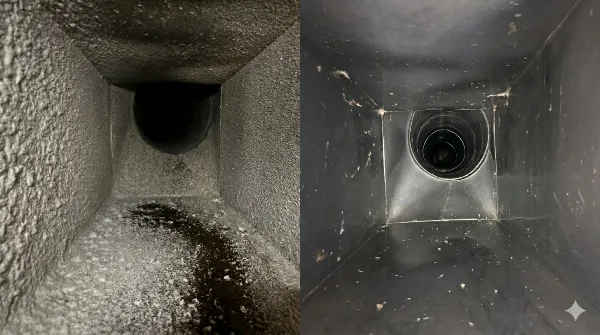
A kitchen extract clean happens overnight, behind ceilings and on roofs, usually with nobody from the kitchen watching. All you see is the canopy and a certificate. Most of the time that’s fine. But if the certificate has no photos of the duct, if grease is still dripping from the canopy a week later, or if the fan is just as loud as before, you may want to know whether the whole system was really cleaned.
Post-clean verification gives you an independent answer.
Verification is also useful for landlords, managing agents and head offices who need confidence that cleans at sites they don’t visit are being done properly. It can be a one-off check, or a regular spot check across a group of sites.
What we check
- We look at the certificate and report you were given, and note what it says was cleaned and what was recorded as inaccessible.
- We trace the system from canopy to discharge and open the access panels we can reach.
- We take grease readings by Wet Film Thickness Test (WFTT) or Deposit Thickness Test (DTT) at set points.
- We photograph the inside of the canopy, plenum, ductwork, fan and discharge.
- We compare what we find with what the report says, and set it out plainly.
Where we can’t reach a section, we say so, just as we would on our own reports. Our findings cover what we could see and measure, with photos for every point.
What the results can show
- The clean covered the system as the report describes.
- Sections were missed but not recorded as inaccessible.
- Sections were recorded as inaccessible that could have been reached.
- The canopy and filters were cleaned, but the duct or fan weren’t.
- Grease levels are already high again, which may mean the cleaning interval is too long.
We report facts, readings and photos. We don’t make claims about another contractor’s intentions, and we’ll be fair about what we find. If the system is in good order, we’ll say so.
Whatever we find, you keep the report, readings and photos to use as you see fit.
Timing matters
Verification is most useful soon after a clean, before grease starts building up again. If it’s done weeks later in a busy kitchen, new grease will be present and the results will reflect that as well. Tell us the date of the clean and we’ll plan the visit for as soon as the kitchen can be closed.
We’ll need access to the same parts of the system the original contractor had: roof access, plant rooms, ceiling hatches and keys. Let us know what’s involved when you book, and send us a copy of the certificate and report so we can plan the visit around them.
The sooner after the clean we visit, the clearer and fairer the picture will be.
Readings and what they mean
BESA guidance for kitchen extracts is that grease should not exceed a mean of 200 microns between cleans, and that 500 microns or more at any point needs immediate spot cleaning (BESA: kitchen extract system cleaning). After a thorough clean, readings should be far lower than before it, at every point, and the photos should show clean metal throughout. We record readings alongside photos, so the evidence speaks for itself.
What to do next
If the verification shows the clean was thorough, keep our report with your certificate as extra evidence. If it shows gaps, you can take the report back to the contractor, or we can quote to put it right with a full TR19® Grease clean. Either way, you’ll know where you stand. Our contractor checklist can help with future bookings.
If our report shows sections were recorded as inaccessible, look at whether access panels could be fitted so they can be cleaned next time. If grease levels are rising fast, the cleaning interval may need to be shorter. Either way, the findings give you something solid to act on.
What it costs
We don’t publish prices. It depends on the size of the system and how many access points there are to open. We’ll give you a fixed quote, usually within one working day.
Near you
- London
- Brighton
- Southampton
- Portsmouth
- Reading
- Oxford
- Milton Keynes
- Guildford
- Chelmsford
- Maidstone
- Woking
- Crawley
Related
Post-clean verification: common questions
Can you check a clean done by another company?
Yes. We check the system against the certificate and report you were given, with our own readings and photos.
How soon after the clean should verification happen?
As soon as possible, before new grease builds up and affects the results.
What if the clean wasn’t done properly?
You’ll get a plain report with readings and photos. You can take it to the contractor, or we can quote for a full clean.
Do you verify your own cleans?
Every clean we do includes readings and before and after photos in the report, so you can see what was done.
Is post-clean verification the same as an insurer audit?
They’re related. Verification checks one clean; a TR19 audit looks at the system and your records as a whole.
Page updated 30 October 2026