Greater London · Kitchen extract cleaning
Battersea kitchen extract cleaning
Kitchen extract cleaning in Battersea from ventilation hygiene specialists trading since 2009. Out-of-hours visits and 24/7 emergency callout.
- An extract that has never been cleaned to TR19
- Poor airflow at the canopy
- Stale cooking odours from the system
Kitchen extract cleaning for kitchens and businesses in Battersea
Cooking sends fat-laden vapour into the canopy with every service. It cools inside the duct and settles as a sticky film that thickens month by month. That layer will burn, and a proper clean removes it before it becomes a fire risk. We are often asked to deal with a new tenancy or takeover with no cleaning history and poor airflow at the canopy, across plenums and filters, discharge points and canopies and hoods. When a restaurant in Battersea asks for duct cleaning, it’s nearly always the kitchen extract they mean, and that is our main job: canopy to fan, to TR19® Grease.
The fire risk in a kitchen extract sits in the parts nobody sees: the plenum, the duct and the fan, so that is where most of the work in Battersea goes.
London kitchens tend to trade late and open early, so work in Battersea is normally booked for the night or the early hours. Parking, loading and access to the roof are agreed with the building before the night of the clean.
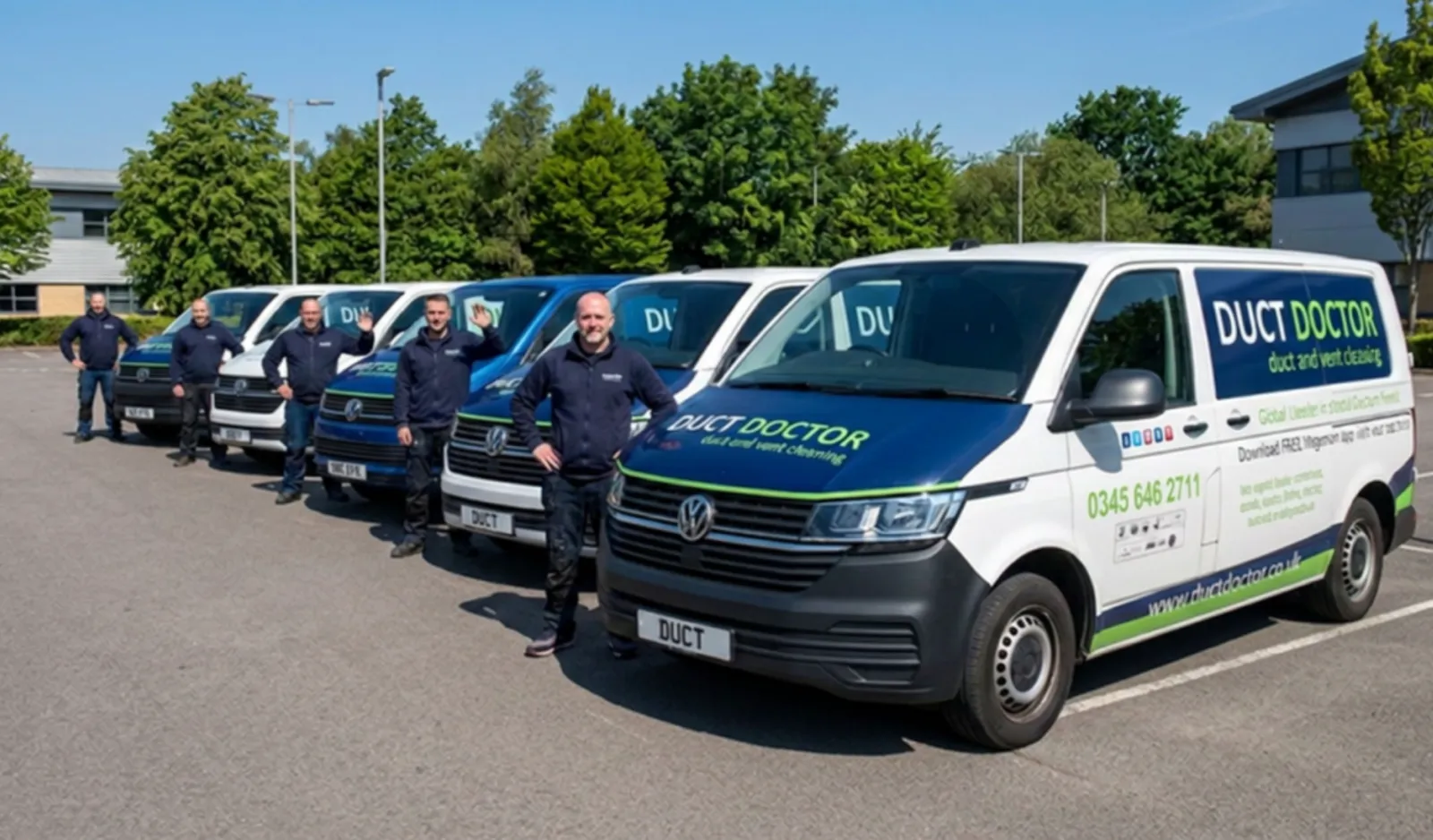
Duct Doctor has been trading since 2009, and we are a BESCA Vent Hygiene Elite member, cleaning to BESA TR19® Grease. CHAS, SafeContractor and ISO 9001 are in place too, and we are fully insured.
- Place
- Battersea (SW11, SW18, SW4)
- Wider area
- Greater London
- Records
- Certificate plus before-and-after photos
- Quotes
- A fixed price before any work starts
- Hours
- When your site is closed, plus a 24/7 line
- Telephone
- 0345 646 2711
- Reviewed
- 30 October 2026
Looking after it afterwards
No system stays clean for ever, but care slows the build-up. Our tips:
- Refit filters properly after cleaning
- Flag any change in how the extract sounds or works
- Wipe the canopy down at the end of each day
- Switch the fan on before cooking starts
The certificate records when the clean was done, where and by whom. Keep it in the maintenance log with your fire risk assessment so it’s ready when anyone asks to see it.
Wipe the canopy down regularly and empty grease troughs or collection points. A daily wipe isn’t a deep clean, but it helps between visits.
What the work involves, part by part
Grease filters
Gaps around filters let fat through to the duct. Each filter is checked as it goes back in, and flag any that do not.
Extract fan and discharge
The discharge is where air leaves the building, which can collect grease and stain the surface around it. It’s cleaned as far as safe access allows, and any limits are recorded.
What happens on the day
Night work is normal for us. Evenings, nights and weekends are when much of our work happens, so a kitchen or building can carry on as usual the next day. The visit itself takes a few hours for a small kitchen, longer for a large system. Before any visit in Battersea, we agree where the van can stop and how equipment reaches the system.
- We survey the system, from your pictures or on site, canopy to discharge.
- Grease thickness is measured and the price is fixed before work starts.
- On the night, the equipment is off and cool and the kitchen is sheeted.
- We work through the system from the canopy to the fan and discharge.
- We re-test, photograph and send your certificate and photo report.
Preparing for the visit
- Find the previous report, if there is one
- Plan for cooking equipment or plant to be off before we arrive
- Mention any parking or loading restrictions
Get a fixed quote
To get a fixed quote, call us on 0345 646 2711 or use the quote form with the site type, your trading hours and a short description of the system. Photos and the last report, if you have one, make the quote quicker. We normally come back within one working day.
Read more
Places near Battersea
What else we do in Battersea
Signs you need kitchen extract cleaning in Battersea
What’s on the menu matters as much as how much is cooked. Fryers, grills and open flames throw much more fat into the extract than gentler cooking, which is why grease readings matter more than the calendar.
The symptoms we are asked about most are:
- Proof of cleaning requested by an insurer
- An extract that no longer clears the smoke
- Years of baked-on grease in the ducts
- A kitchen with no current TR19 certificate
If you run a church or community hall kitchen, near Clapham Welsh Presbyterian Church or elsewhere in Battersea, its extract still collects grease from every lunch and event.
Questions to ask before booking
- Which accreditations they hold, and whether you can check them
- Whether the whole system is included, or only the parts that are easy to reach
- If the quote is a fixed price or an estimate
- How they set the interval to the next visit
Kitchen extract cleaning in Battersea: the local picture
The FSA’s data shows about 104 pubs and bars and about 12 hotels and B&Bs registered across Battersea and its immediate surroundings (about a mile and a half). Any of them serving cooked food has an extract to keep clean, from canopy to discharge. Overnight is the normal time to clean a London kitchen extract, so trading is not affected. Food hygiene inspections in Battersea are the job of Wandsworth council’s environmental health team. They look at how clean the premises and equipment are, and the kitchen extract is part of that. A dated certificate in the maintenance file answers the question before it’s asked.
School kitchens, at schools like Christ Church CofE Primary School for example, are normally cleaned in the holidays so no lunches are lost. Healthcare kitchens, like those at hospitals such as Battersea General Hospital (about 0.8 miles north), often cook for long hours, which puts them in BESA’s heavier-use bands.
Battersea is about 3 miles south-east of Kensington, in Greater London. We provide kitchen extract cleaning for commercial premises of every kind in Battersea and the rest of Greater London. Across Greater London, we cover 764 places, Battersea among them.
Postcode districts we cover here for kitchen extract cleaning: SW11, SW18 and SW4. Local streets include York Road, Este Road and Home Road, all of which we cover for kitchen extract cleaning. You’ll find Battersea on the A3207, so it’s easy for us to get to for kitchen extract cleaning. Close by, we work in Clapham Junction (1 mile north-west), Sands End (1 mile north-west), Chelsea Harbour (1 mile north-west), Wandsworth (1 mile south-west) and Clapham (1 mile east). Further out, we also cover London (4 miles north-east), City of Westminster (4 miles north), Marylebone (4 miles north), Kensington (3 miles north-west), St Pancras (5 miles north-east) and Shoreditch (6 miles north-east).
What’s near Battersea
Locally, jobs take us to businesses close to The Falcon pub, Emanuel School and Imperial Park. There’s a railway station in Battersea itself: Clapham Junction station. Well-known places in the area include Baynard's Castle (4.4 miles north-east) and Southside Wandsworth (1.3 miles south-west). Not far away are Henman Hill and Battersea Park Lake.
Questions from Battersea
Does London parking affect a job in Battersea?
A loading bay, a visitor permit or off-street space near the site in Battersea makes the visit easier to plan. Much of our London work is done overnight, which helps.
Which fire service covers Battersea?
Fire safety enforcement in Battersea is handled by London Fire Brigade. If a fire safety officer visits a commercial kitchen, they may ask about the fire risk assessment and how the extract is kept clean.
Do you survey before quoting?
Yes. Photos often do the job, and larger or hidden systems get a visit.
How often does a kitchen extract system need cleaning?
That comes down mainly to daily cooking hours. Heavy use of 12 to 16 hours a day calls for a clean at least every 3 months under BESA guidance, and lighter use less often. Your report gives a recommended next clean date.
What does TR19 mean?
It’s BESA’s specification and the benchmark insurers, fire officers and EHOs look to. It covers how systems are inspected, cleaned and checked, and it takes a risk-based approach.
How much does kitchen extract cleaning cost?
It depends on the site, so we quote each one individually. To get one, call us on 0345 646 2711 or use the quote form with the site type, opening hours and a few photos.
What do you need from me for a quote?
Some pictures and a quick description of the system, with the address and opening hours. If we need more, we will ask.
How do you protect the area?
We start with protection: floor sheeting and covers over nearby surfaces and equipment. The area is left tidy, with our waste taken away.
How we price kitchen extract cleaning
The survey tells us what the work involves. The main factors are:
- When the work can happen, such as evenings, overnight or weekends
- Site requirements such as sign-in and permits
- Access, including roofs, risers and ceiling voids
- Travel, parking and unloading
Whatever the type of site, the quote works the same way: how much there is, how we reach it, what state it’s in and when we can work. Call for a fixed quote and we will explain each part.
What to send for a quote
When you call or email, these details help:
- Wide pictures of the system and the area around it
- Close-ups of filters, grilles, hatches or access panels
- Anything you’ve noticed, such as smells, noise, drips or poor airflow
- Where the plant sits or the system leaves the building, such as a roof or outside wall
Need a price for kitchen extract cleaning? Please call us on 0345 646 2711 or use the quote form and tell us about the site. We’ll talk you through the work and send you a fixed quote before you commit to anything.
Why deal with it now?
There’s no law that names TR19, but the Fire Safety Order 2005 still applies. It puts a duty on the responsible person to assess and reduce fire risk, and in a kitchen that means keeping extract grease under control. Cleaning to TR19 is the recognised way to show you’ve done it. In a London building, a problem in a duct, damper or fan rarely stays in one unit.
Every site is different, so each one gets its own fixed quote. The size of the job, how we reach it, its condition and the working hours all make a difference.
Why us?
- A fixed price before any work starts
- In business since 2009
- Photo reports with every job
- A single point of contact for sites across the South East and London
Take a look at what affects the cost or our accreditations and certificates.
When something else is needed
An honest diagnosis matters more to us than a booking, so here’s what kitchen extract cleaning won’t do:
- Ductwork that’s corroded, split or leaking (that is for a ductwork contractor)
- A broken extract fan that won’t run
- Blocked drains from a neglected grease trap (a separate service)
If you are not sure, just call us on 0345 646 2711 or drop us a line and we’ll give you a straight answer.
Parts of the system we cover
- Vertical risers
- Horizontal duct runs
- Plenums and filters
- Discharge points
- Canopies and hoods
- Extract fans