Greater London · Fire damper testing
Fire damper testing in Richmond, Greater London
Fire damper testing across Richmond and nearby, booked around your opening hours and signed off in writing with photos.
- Dampers hidden with no access panel or hatch
- Fire dampers with no recent test record
- Corroded dampers in damp risers and plant rooms
Fire damper testing in Richmond
Each damper we test gets a location, a result and a note of its condition. Passes are reset and left ready to work, while failures are flagged with what we found. You end up with a clear record to keep with your fire safety documents. The work covers fusible link fire dampers, offices and schools and hospitals and care homes, and common reasons people get in touch are dampers flagged on a fire risk assessment and dampers overdue for their annual drop test.
Many London buildings have been through several fit-outs, and dampers are often left behind new ceilings with no way to reach them. Locating each damper in a building in Richmond is the first part of a proper test.
Each visit ends with a written report and photos, so there’s a dated record of the work. Where the work is a TR19® Grease clean, the certificate is issued through the BESCA Vent Hygiene Elite portal.
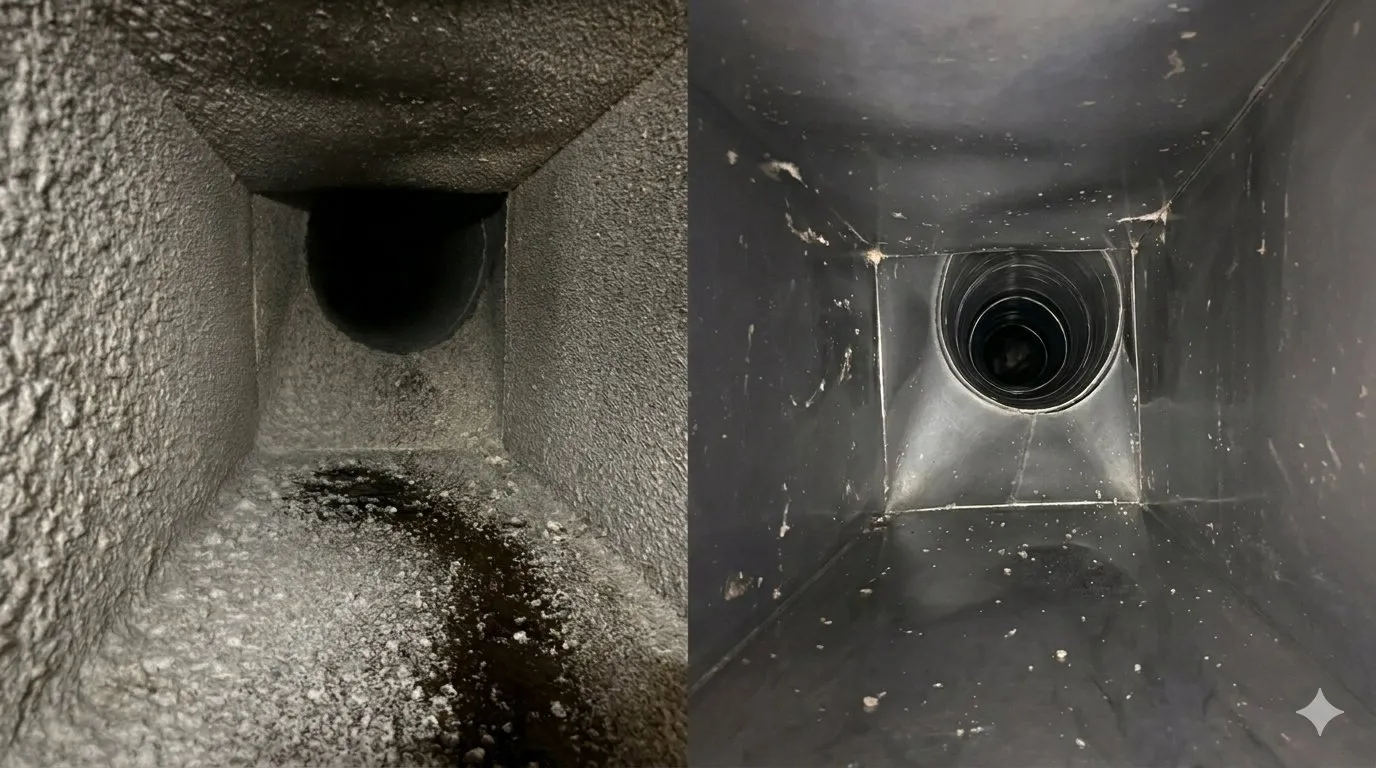
- Where
- Richmond (TW9, TW1, TW10)
- Region
- Greater London
- Paperwork
- Photo report after each visit
- Price
- Fixed quote, typically within a working day
- Hours
- Nights, weekends or holidays to suit you
- Telephone
- 0345 646 2711
- Reviewed
- 30 October 2026
Fire damper testing around Richmond
Food Standards Agency data includes about 13 schools, colleges and universities, about 22 care, childcare and hospital premises and about 6 hotels, B&Bs and guest houses within roughly a mile and a half of the centre of Richmond. Many buildings of this kind have ductwork through fire-resisting walls and floors, and the dampers at those points need testing at least annually. Ceiling voids and risers in London buildings can hold many dampers, and each one has to be reached and recorded. London Fire Brigade covers Richmond. Under the Fire Safety Order, the responsible person has to keep fire safety systems, dampers included, in working order, and the fire authority enforces that in most non-domestic premises.
School buildings such as The Vineyard School are normally tested in the holidays, wherever they have dampers. For buildings around Richmond station with ducted ventilation, any fire dampers need an annual test at least.
Richmond is about 5 miles south-west of Kensington, in Greater London. Richmond gets the same approach as every site we work on: diagnosis first, a fixed price, out-of-hours working where needed and a written report with photos. Richmond is one of 764 places in Greater London where we work for commercial clients. You can also see our page for London, roughly 9 miles from Richmond.
Every address in TW9, TW1 and TW10 is covered for fire damper testing, from busy streets to back roads. Fire damper testing is available to premises on Kew Road, Dee Road and Park Road and the roads around them. Neighbouring places we cover for fire damper testing include Petersham (1 mile south), St Margarets (1 mile west), Eel Pie Island (1 mile south-west), Ham (1 mile south) and Isleworth (2 miles north-west). Within a short drive, we also cover London (9 miles east), City of Westminster (8 miles north-east), Marylebone (8 miles north-east), Kensington (5 miles north-east), St Pancras (9 miles north-east) and Shoreditch (11 miles north-east).
Local landmarks in Richmond
In Richmond, that means kitchens and buildings near The Victoria pub, Christ's Church of England Comprehensive Secondary School and Terrace and Buccleuch Gardens. The nearest railway station is Richmond station, about 0.5 miles north. Well-known places in the area include Eel Pie Island Museum (1.2 miles south-west) and South Middlesex Hospital (1.6 miles west). Open spaces near Richmond include Richmond Hill and Ham Lands.
When to call us in Richmond
Fusible links and springs do not last for ever. A link can be damaged, painted over or swapped for the wrong one, and a tired spring may not drive the blade home, which only shows up when the damper is dropped.
Look out for any of the following:
- Dampers hidden with no access panel or hatch
- Dampers overdue for their annual drop test
- Motorised smoke dampers due for testing
- Blades that jam part-way when released
Historic buildings that have had ventilation added later can hide dampers in awkward places; Pembroke Lodge, about 1 mile south, is one of the historic houses in the area around Richmond.
What your quote should include
- Whether a written report and photos are included
- Whether the quote shows VAT
- Which accreditations they hold, and whether you can check them
- How areas they can’t reach will be recorded
Managing agents and facilities teams in Richmond
The Fire Safety Order 2005 puts the duty to manage fire risk on the responsible person, and that can be the employer, the owner, a landlord, a facilities manager or a managing agent. With shared responsibility, good records help everyone.
Keeping records across a portfolio is half the battle. Each visit produces a dated report with photos, so you can show an insurer or inspector what was done at each site.
How we price fire damper testing
Your quote is based on your site. We take into account:
- The condition of the system
- Whether we need access equipment or extra panels
- How big the system is
- Site requirements such as sign-in and permits
Several systems or sites on one quote can make for a more efficient booking. Mention every system or site you need covered and we will price it together.
Asking for a quote
When you call or email, these details help:
- The postcode and the type of business
- How we’d reach plant on a roof or in a plant room
- The paperwork from the last visit, if you have it
- Wide pictures of the system and the area around it
Every quote begins with a look at the system, either from photos and details you send or from a site visit. Then we send a fixed price so you know the cost before we start.
How the visit works
We work around your opening hours, not the other way round. Most visits are booked for when the area is out of use, such as evenings, overnight, early mornings or weekends. When the team arrives, the work area is protected and the relevant equipment is switched off to cool, and the job takes from an hour or two in a small building to several visits on a large estate. Most London sites cannot stop for the day, so work in Richmond is normally done overnight, early in the morning or at weekends.
- We gather what’s known about the dampers, from drawings, registers or past reports.
- Dampers are located one by one and reached through their access panels.
- Every fire damper is dropped, and every smoke damper is tested through its controls.
- Dampers that close fully are reset and left open.
- We report on every damper, with faults and suggested remedials set out.
Getting ready for the visit
- Mention any locked doors, roof access or ceiling voids
- Move anything stored near the system
- Make sure equipment near the work can be switched off and left to cool
Ask for a quote
To get a fixed quote, ring 0345 646 2711 or email us with the site type, your trading hours and a short description of the system. Photos and the last report, if you have one, make the quote quicker. You’ll usually have a quote within one working day.
Read more
Richmond questions
Can parking be tricky for a job in Richmond?
A loading bay, a visitor permit or off-street space near the site in Richmond makes the visit easier to plan. If the building has a loading slot system, we will book into it.
Do you work at weekends in Richmond?
Yes, we can come after you close and finish before you open. Your customers, staff or residents in Richmond needn’t be disturbed. Let us know the hours you’re closed and we will book within them.
What paperwork do we get after testing?
The record we give you is a report of the tests, damper by damper. Any failures come with a note of the remedials needed.
How much does fire damper testing cost in Richmond?
There’s no set price, as it depends on the job: how big it is, what state it’s in, how we reach it and the working hours. You get a fixed price before work begins.
Do you work with multi-site operators?
Yes. You deal with one contact for every site in our area, with visits on a regular schedule.
What if a damper has no access panel?
It’s noted as inaccessible rather than skipped. Once there’s a panel or a way through the ceiling, it can be tested.
Will we have to shut during the visit?
Not usually. Visits are timed for when the area is closed, such as overnight or at a weekend, so the site can carry on as normal.
What types of premises do you cover?
Any site with a kitchen or a ventilation system to look after, from a single café to a large school. We work with hotels, schools, care homes, offices, retail and leisure sites.
Why deal with it now?
Testing every year builds a history for each damper, which shows patterns early. If the same damper keeps giving trouble, the record shows it before it becomes a failure. Leaving it on a busy London site only adds to the work.
A single site or a whole portfolio, we price it on the same basis: what needs doing, how we get to it and when. The price is fixed before any work starts.
Why book with us
- Ventilation hygiene specialists since 2009
- Evenings, overnight and weekends, plus 24/7 emergency callout
- Fixed quotes, typically within one working day
- A single point of contact for sites across the South East and London
Take a look at what affects the cost and our accreditations.
In-house cleaning or a specialist?
Away from the kitchen, the in-house job is mainly checking: keeping grilles clear, noting unusual noise or smells and logging filter changes. Cleaning inside ducts and units is specialist work.
Staff cleaning and specialist work aren’t the same thing. Wiping filters daily and washing them weekly keeps the visible parts in order, but they do not reach the grease that builds up further in. That part needs specialist access and equipment.
Aftercare tips
Think of this as the after-treatment advice, short and simple:
- Keep damper test reports with the fire safety log
- Update the register when ductwork changes
- Don’t let anything obstruct a damper’s blade
- Don’t let hatches get painted shut or boarded over
The next test should be no more than a year away. The guidance is at least once a year, so it helps to book it before the date slips.
Keep a damper register: location, type, last test date and result. It stops dampers getting lost as the building changes.