Hampshire · Kitchen extract cleaning
TR19 kitchen extract cleaning in Weavers Down
Kitchen extract cleaning for Weavers Down, with a survey first and a report with pictures at the end. Ask us for a fixed quote.
- A smoky, hot kitchen with weak extraction
- Cleaning needed before an insurance renewal or survey
- Grease smells coming from the extract
About our kitchen extract cleaning in Weavers Down
Not sure when the extract was last cleaned, or by whom? Send a few photos of the canopy and filters when you call 0345 646 2711, or email photos, and we will come back with a fixed price for the work in Weavers Down, usually within one working day. If you are dealing with cleaning needed before an insurance renewal or survey and extraction mentioned at an environmental health visit, we can help, from discharge points, horizontal duct runs and canopies and hoods onwards. Kitchens in Weavers Down book us for TR19 cleaning for three reasons: the insurer asked, the EHO asked, or the canopy is dripping. We handle the clean and the paperwork in one visit.
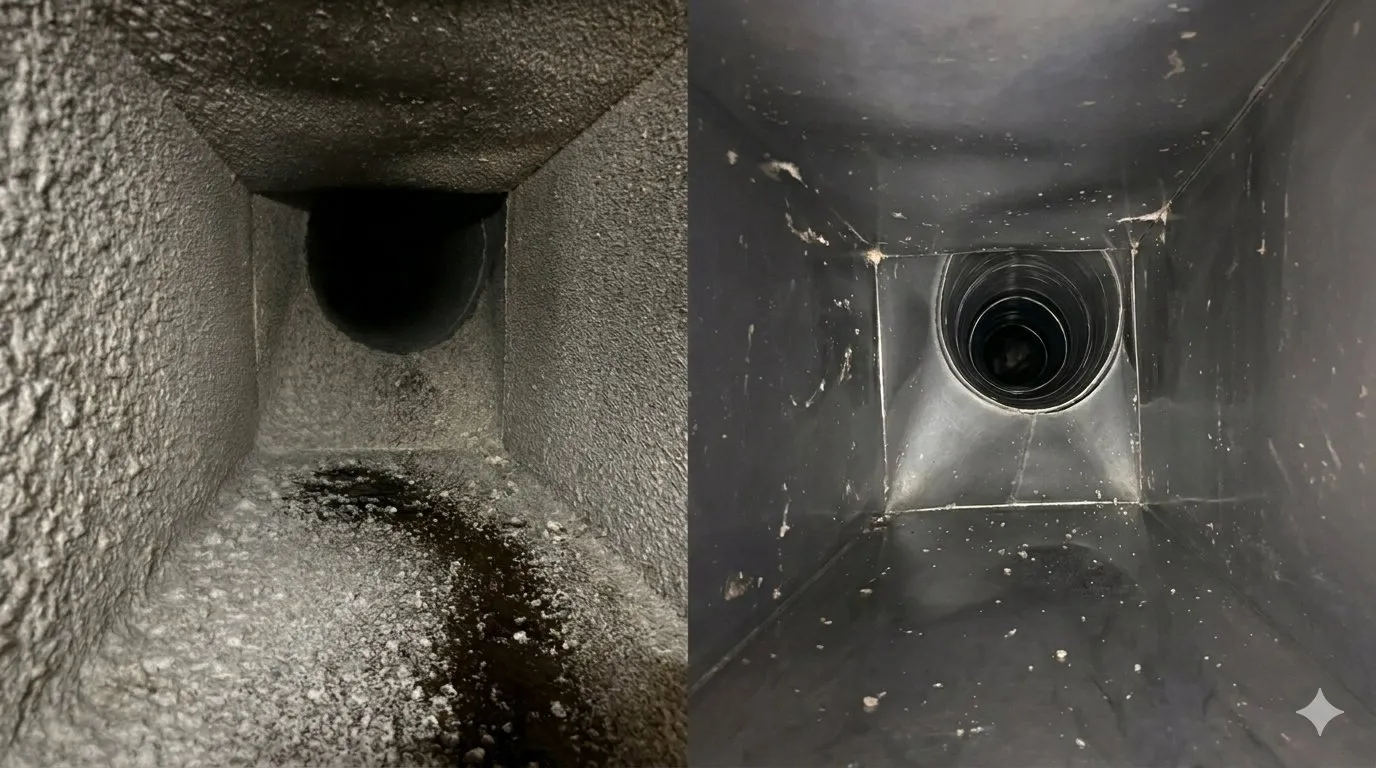
Grease that collects out of sight, behind the filters and along the duct, is what insurers and fire officers worry about, so that is where most of the work in Weavers Down goes.
For a kitchen in or near Weavers Down, the visit is planned around opening hours and the journey, and the clean covers the whole system, as it would anywhere: canopy to discharge, then a TR19® certificate and a photo report.
Think of the report as the system’s health record: dated, with photos, and showing what was done. Grease extract cleans are also certificated to TR19® Grease through the BESCA VHE portal and sits alongside the report.
- Where
- Weavers Down (GU30)
- Wider area
- Hampshire
- Reporting
- TR19® certificate and photo report
- Price
- A fixed price before work begins
- Hours
- When your site is closed, plus a 24/7 line
- Call
- 0345 646 2711
- Reviewed
- 30 October 2026
What staff can safely do
Your own staff can handle the daily basics: wiping down canopy surfaces, cleaning filters and keeping a simple log. What they cannot safely do is clean inside the ductwork, the fan or the risers, which is where we come in.
In-house cleaning and specialist cleaning do different jobs. A daily filter wipe and a weekly filter wash keep grease down at the front of the system, but grease that has passed the filters is out of reach. That part needs specialist access and equipment.
Kitchen extract cleaning around Weavers Down
The FSA’s food hygiene register shows about 3 restaurants, cafés and works canteens and about 5 sandwich bars and takeaways within 1.5 miles or so of the middle of Weavers Down. Each one that cooks under a canopy has an extract system that collects grease and needs regular cleaning. It’s East Hampshire council that sends environmental health officers to food businesses in Weavers Down. Extraction counts as kitchen equipment, so its condition can come up on the day. A dated certificate in the maintenance file answers the question before it’s asked. Fire safety in Weavers Down falls to Hampshire and Isle of Wight Fire and Rescue Service. Fire and rescue authorities enforce the Fire Safety Order in most non-domestic premises, and in a kitchen that fire risk includes the grease in the extract.
Healthcare kitchens cannot easily close, so their extracts are cleaned overnight or between meal services; the nearest hospital to Weavers Down is Chase Community Hospital, about 2.3 miles north-west.
Weavers Down is about 7 miles north-east of Petersfield, in Hampshire. From the centre of Weavers Down to the outskirts, we cover kitchen extract cleaning for every kind of premises, from a single unit to a large public building. 683 places in Hampshire are on our list, from busy centres to quieter spots. There’s also a page for Guildford, about 16 miles away.
We cover every part of the GU30 postcode area for kitchen extract cleaning and the streets around it. Streets in the area include Bircholt Road, Longmoor Drive and Beechcroft Close, all of which we cover for kitchen extract cleaning. Nearby, we also carry out kitchen extract cleaning in Conford (1 mile north), Passfield (1 mile north), Liphook (1 mile east), Longmoor (2 miles west) and Woolmer (2 miles west). Within a short drive, we also cover Farnborough (15 miles north), Fleet (14 miles north), Horndean (14 miles south-west), Aldershot (12 miles north), Alton (8 miles north-west) and Petersfield (7 miles south-west).
Local landmarks in Weavers Down
Typical jobs here are in premises near Bohunt School and the streets around them. The closest station to Weavers Down is Liphook station, about 1.5 miles east. Other landmarks nearby include Chase Community Hospital (2.3 miles north-west). Open spaces near Weavers Down include Wheeler's Down and Deadwater Valley.
When to call us in Weavers Down
It’s common for parts of a duct to have been missed for years. The usual reason is a lack of access panels, so those sections were never reached. That hidden grease keeps building where nobody looks.
The symptoms we are asked about most are:
- Grease drips onto cooking equipment
- Proof of cleaning requested by an insurer
- A kitchen taken over without any extract records
- A kitchen with no current TR19 certificate
If you look after a school kitchen, at a school such as Liphook Church of England Controlled Junior School or anywhere near Weavers Down, the holidays are the usual time for a TR19® clean.
Before you book anyone
- Exactly which parts of the system are covered
- When the next visit should be, and why
- What hours they’ll be on site
- Whether inaccessible sections are listed on the report
More services for Weavers Down
What we do, step by step
Your staff don’t need to do much on the day. A contact on site lets us in at the agreed time and points us to the system, and we take it from there. Afterwards, the area is left tidy and the written report follows. Visits to a village like Weavers Down are booked in advance, at a time that suits whoever runs the site.
- You send photos or we visit, and the system is surveyed from canopy to discharge.
- Grease thickness is measured and the price is fixed before work starts.
- On the night, the equipment is off and cool and the kitchen is sheeted.
- Filters, canopy and plenum are cleaned, then the ducts, risers, fan and discharge.
- Readings are repeated, photos taken, and your TR19 certificate and photo report issued.
Before we arrive
- Mention any locked doors, roof access or ceiling voids
- Arrange a key holder or contact on site
- Tell us the best time to work, such as after service or at a weekend
Ask for a quote
Quoting starts with a diagnosis, either from pictures and details you send or from a site visit. Then we send a fixed price, before work begins.
Advice
Managing agents and facilities teams in Weavers Down
Records are where multi-site compliance often slips. Each visit ends with a dated report and photos, so you can show an insurer or inspector what was done at each site.
We regularly work with managing agents. Tell us the site, the work and the access arrangements and we’ll come back with a fixed quote.
How we price kitchen extract cleaning
We quote each job individually. These are the things that affect it:
- When the work can happen, such as evenings, overnight or weekends
- Whether it’s a one-off visit or part of a schedule
- Travel, parking and unloading
- The number of sites or systems
Working hours, access and the scale of the site all affect the cost. We take each of them into account and give you a fixed price before any work starts.
What to send for a quote
Many jobs can be priced from photos and some basics. Useful things to send:
- Any access panels or hatches you can see
- The times we could work without disrupting the site
- Anything you’ve noticed, such as smells, noise, drips or poor airflow
- Where the plant sits or the system leaves the building, such as a roof or outside wall
The quickest way to a quote is to send photos: the system from a couple of angles, plus any access panels or hatches. Add the site type and your opening hours, and we can price many jobs without a visit.
Honest limits
Kitchen extract cleaning cannot fix everything, and we’d rather say so up front. It won’t put right:
- A canopy that is too small or a system that was badly designed
- A duct that is holed or coming apart
- Fire dampers that will not close (that needs damper testing and remedials)
If you’re not sure, just ring 0345 646 2711, or email photos and we’ll give you a straight answer before you book.
What the work covers
- Extract fans
- Canopies and hoods
- Vertical risers
- Horizontal duct runs
- Plenums and filters
- Discharge points
Looking after it afterwards
Simple habits between visits make a real difference. We recommend:
- Make sure every filter is fitted before cooking
- Give the canopy a daily wipe
- Run the extract fan throughout cooking
- Report grease drips, smells or fan noise right away
The certificate records when the clean was done, where and by whom. File it with the fire risk assessment and the maintenance log, so it’s to hand when an insurer, fire officer or EHO asks.
Wipe the canopy down regularly and empty grease troughs or collection points. It will not replace a TR19 clean, but it slows what reaches the duct.
Weavers Down: your questions answered
Will you come out to Weavers Down?
Yes, smaller places are covered as well as towns. Photos of the system and directions to the site help us plan the visit.
Who is the fire and rescue service for Weavers Down?
That is Hampshire and Isle of Wight Fire and Rescue Service. Records of extract cleaning are a sensible thing to have ready if a fire safety officer carries out an audit.
Do you look at the system first?
Yes. We always survey first, from your photos and details, or with a visit where needed. A fixed quote follows.
What should I send you?
Only a few details: the address, the site type, your opening hours and how we reach the system. Photos and any previous paperwork make it quicker. Then call us on 0345 646 2711 or email us.
What types of premises do you cover?
Any commercial site with kitchens or ventilation, from a small pub to a hospital. Hotels, schools, care homes, offices, shops and leisure sites are all part of our work.
How do you protect the area?
By covering it before any work starts. We keep the work contained and leave the area clean.
What happens to the waste?
We contain it and take it with us. Grease, debris and waste water are collected as the work goes on rather than letting it spread.
Do you offer maintenance contracts?
Yes, of course. Send details of the systems and how they’re used, and we’ll suggest a schedule and quote for it.