Kent · Kitchen extract cleaning
Kitchen extract cleaning in Brook, Kent
Specialist kitchen extract cleaning for Brook: diagnosis first, then a fixed quote, the work and a report with pictures. Call for a fixed quote.
- A TR19 certificate needed for the insurer
- Rancid smells from grease in the duct
- Poor airflow at the canopy
How the visit works
On the day, we arrive at the time agreed with you, which is often after service, overnight or at a weekend. Equipment that has to be off is switched off and allowed to cool first, and floors and nearby surfaces are sheeted. On site, it takes a single shift for most kitchens, with long duct runs and tall risers needing more time. We agree a date with you, plan the drive to Brook and turn up when the site is quiet.
- First the diagnosis: a survey of the whole system and its access points.
- Grease readings set the baseline, and a fixed quote follows.
- We arrive after close, protect the area and contain the waste.
- The treatment: heavy grease scraped out, then every part degreased to TR19® Grease.
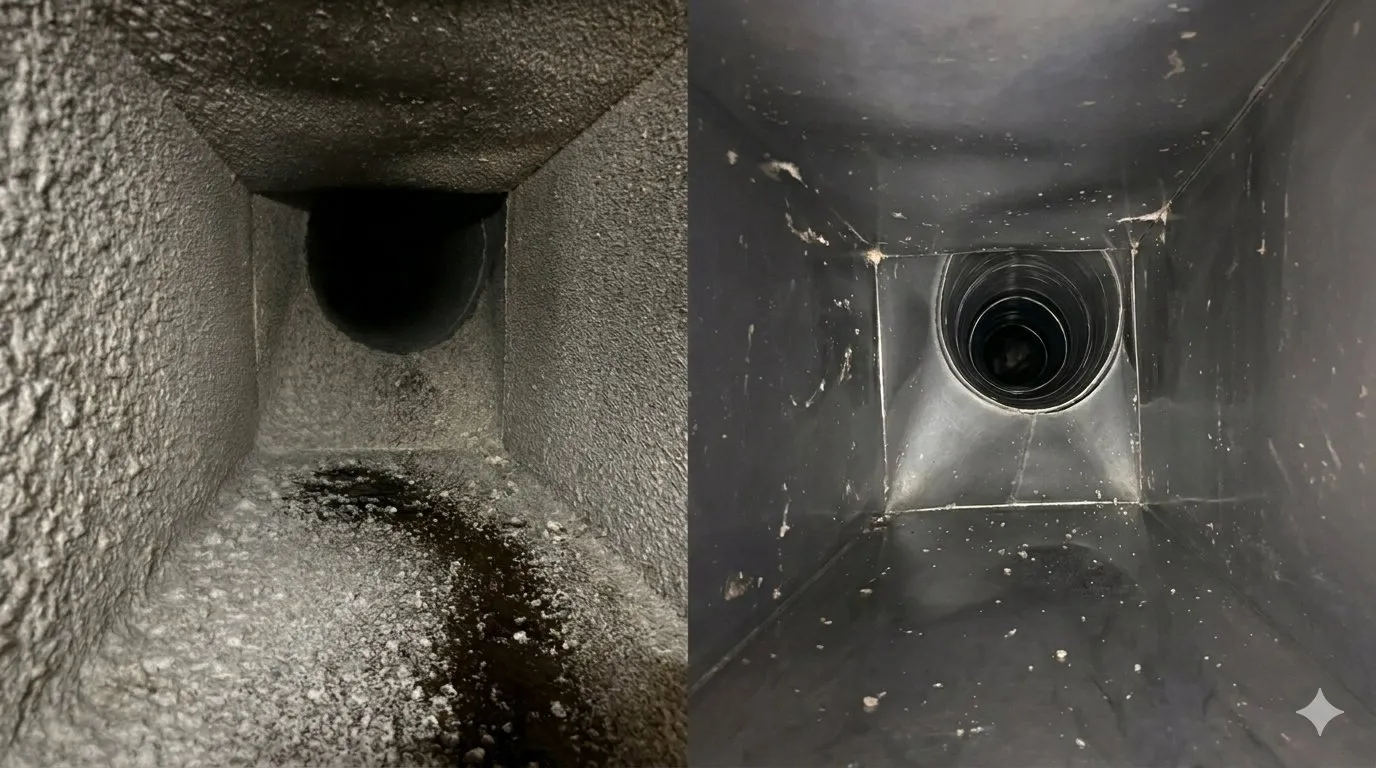
- The sign-off: post-clean readings, a TR19 certificate and a photo report with the next clean date.
Preparing for the visit
- Have your last certificate or report to hand
- Move anything stored near the system
- Tell us where we can park and unload
Ask for a quote
Quotes are quick. Call or email with a few details and you’ll normally have a fixed price within one working day. Where a survey is needed, we arrange a time that suits the site.
Advice
How we handle kitchen extract cleaning in Brook
A closed kitchen is not earning, so the timing of a clean matters. Cleans are booked for evenings, overnight or weekends, or during holidays where a site closes for them. Equipment is switched off and left to cool, the area is sheeted, and the kitchen is handed back ready to cook. The work covers vertical risers, horizontal duct runs and extract fans, and the jobs we see most are a kitchen with no current TR19 certificate and grease dripping from the canopy or filters. For TR19 kitchen extract cleaning in Brook, one call covers the survey, the clean and the paperwork.
Kitchens that fry and grill hardest need the most frequent cleans, so the interval is set by what you cook as well as how long.
Work in a small place like Brook starts with a call to agree access and timings, and the clean itself is the same full TR19® job as in any town: canopy to discharge, then a TR19® certificate and a photo report.
Every visit ends with a written report and pictures, so there’s a dated record of the work. Where the work is a TR19® Grease clean, the certificate is issued through the BESCA Vent Hygiene Elite portal.
- Where
- Brook (TN25)
- Region
- Kent
- Reporting
- Certificate plus before-and-after pictures
- Price
- Fixed quote, usually within a working day
- When we work
- Overnight and weekend work, 24/7 emergency callout
- Call
- 0345 646 2711
- Page updated
- 30 October 2026
Kitchen extracts in Brook
There are about 4 restaurants, cafés and works canteens in and around Brook, up to about a mile and a half out, according to the Food Standards Agency’s register. Each one that cooks under a canopy has an extract system that collects grease and needs regular cleaning. Kitchens in Brook get their food hygiene inspections from Ashford council. Extraction counts as kitchen equipment, so its condition can come up on the day. Before-and-after pictures from each clean are a simple way to show the extract is in hand. Kent Fire and Rescue Service covers Brook. Its fire safety officers can audit commercial kitchens, and grease in the extract is part of a kitchen’s fire risk.
Healthcare kitchens, like those at hospitals such as William Harvey Hospital (about 2.4 miles south-west), often cook for long hours, which puts them in BESA’s heavier-use bands. Term dates shape school work: for a school like Brook Community Primary School, an extract clean fits neatly into a half-term or summer break. If you run a church or community hall kitchen, near Church of St Mary or elsewhere in Brook, its extract still collects grease from every lunch and event.
Brook is about 4 miles east of Ashford, in Kent. Brook gets the same approach as every site we work on: a survey first, a fixed quote, work timed around your hours and a report with pictures. Our Kent coverage runs to 922 places, Brook among them. Our Maidstone page covers sites nearby (20 miles or so).
Work in TN25 follows the same survey, fixed quote and written report as everywhere else we cover. You’ll find streets such as The Street, Troy Town Lane and Stonebridge, all of which we cover for kitchen extract cleaning. Close by, we work in Folly Town (1 mile east), Wye (2 miles north-west), Hinxhill (2 miles south-west), Hastingleigh (2 miles east) and Hassell Street (2 miles north-east). Further out, we also cover Ashford (4 miles west), Canterbury (10 miles north-east), Dover (15 miles east), Folkestone (11 miles south-east), Whitstable (14 miles north) and Faversham (11 miles north).
Near you in Brook
Typical jobs here are in premises near Wye School. The nearest railway station is Wye station, roughly 2 miles north-west of the centre. Other landmarks nearby include William Harvey Hospital (2.4 miles south-west) and County Square (3.9 miles west). For a walk, there’s Hatch Park.
Brook questions
Who enforces fire safety at workplaces in Brook?
That is Kent Fire and Rescue Service. TR19® is not law, but it’s the benchmark many fire officers and insurers look to when they ask how often the extract is cleaned.
Do you work overnight in Brook?
Yes. We work evenings, overnight and at weekends. It means the site in Brook keeps running as normal. Tell us your opening hours when you ask for a quote.
What information do you need?
Some photos and a quick description of the system plus the address and your hours. If we need more, we’ll ask.
What do you do with what you remove?
Waste is contained during the work and removed when we leave, from grease and debris to used cleaning water. We don’t leave it behind.
Can you look after several sites?
Yes. Send the list of sites and the work at each and you’ll get one fixed quote.
How often does a kitchen extract system need cleaning?
BESA guidance sets minimums by daily cooking hours: every 3 months for 12 to 16 hours, 6 months for 6 to 12 hours and 12 months for 2 to 6 hours. Measured grease levels set the real interval.
How much notice do you need?
It depends on the time you need and how big the job is. Tell us your preferred dates when you ask for a quote, and if it’s an emergency, call us any time.
Do you have a 24/7 line?
Yes. Our emergency line runs 24/7 for anything that can’t wait until a planned visit. Ring any time and tell us what’s happened.
Why deal with it now?
Environmental health officers inspect food businesses, in Brook as everywhere else, and a greasy canopy or dripping filters won’t go unnoticed. Keeping the extract clean helps the whole kitchen pass muster. Somewhere as small as Brook, losing a kitchen or building to a fault is felt by everyone who uses it.
No two sites are the same, so each one gets its own fixed quote. Size, access, the condition of the system and when we can work all make a difference.
Why book with us
- Out-of-hours work and a 24/7 emergency line
- Fully insured
- We diagnose before we treat
- Each visit written up, with photos
See how cleaning jobs are priced or how to check a contractor.
Part by part
Extract fan and discharge
The discharge is where air leaves the building, and grease can collect there too. We clean it where it can be safely reached, and any limits are recorded.
Schools, hospitals and care homes
In a care home or hospital, the kitchen may cook every day of the year. We plan the clean around meal times and work in a contained, tidy way with as little disruption as possible.
Towns and villages near Brook
Other services in Brook
What affects the quote in Brook
Some jobs are bigger than they look, and some smaller. What affects the quote:
- The number of sites or systems
- The condition of the system
- Site rules, permits and inductions
- Travel, parking and unloading
What you pay reflects the actual work. That’s why every job is surveyed first, and the price is agreed before we start.
What we need to know
Many jobs can be priced from photos and some basics. Useful things to send:
- Your opening hours and when the area is out of use
- Detail shots of panels, filters and grilles
- A few general shots of the system
- Problems your staff have spotted
To help us quote: where the site is, what it is and its opening hours, pictures of the system and any previous report or certificate. Once you have those, call us on 0345 646 2711, or send details by email.
Multi-site and managed buildings
Records are where multi-site compliance often slips. Each visit produces a dated report with pictures, ready to show insurers, fire officers or EHOs.
We also work for facilities teams across offices, schools and healthcare across Kent. Larger estates can be phased building by building around the people who use them.
Aftercare tips
Think of this as the after-treatment advice, in brief:
- Keep the TR19 certificate and photo report in the maintenance log
- Empty any grease troughs or cups on the canopy
- Book the next clean before the date on the report
- Never cook with filters missing or out of place
The report gives a recommended date for the next clean, set from your daily cooking hours and the readings we took. A 3, 6 or 12-monthly maintenance plan keeps it on track, so the date isn’t missed.
Tell whoever looks after the system when something changes. Grease dripping from the canopy, a burning smell or a fan that sounds rough are all signs of build-up, and a grease thickness test can confirm it.
What kitchen extract cleaning cannot fix
An honest diagnosis matters more to us than a booking, so here’s what kitchen extract cleaning won’t do:
- A grease trap that needs emptying
- Damaged duct sections that need replacing
- A canopy that is too small or a system that was badly designed
If you’re not sure, just call 0345 646 2711 or drop us a line and we will give you a straight answer before booking.
Where we work
- Extract fans
- Canopies and hoods
- Vertical risers
- Discharge points
- Plenums and filters
- Horizontal duct runs