Essex · Fire damper testing
Fire damper inspection in Norton Heath
Fire damper drop testing and smoke damper testing, with a record for each damper for businesses, landlords and public buildings in Norton Heath. CHAS, SafeContractor and ISO 9001, and fully insured.
- Smoke dampers that need testing through their controls
- Gaps in the fire damper test log
- Dirty dampers that may not close
What fire damper testing looks like in Norton Heath
Norton Heath is covered by Essex County Fire and Rescue Service. In most workplaces and other non-domestic buildings, it’s the fire and rescue authority that enforces the Fire Safety Order. Norton Heath, about 23 miles from central London, is within our usual area. Visits are booked around your hours, evenings and weekends included.
If you manage a school site such as Blackmore Primary School, any fire dampers can be tested in the holidays. Historic buildings that have had ventilation added later can hide dampers in awkward places; Ingatestone Hall, about 4.8 miles south-east, is one of the historic houses in the area around Norton Heath.
Norton Heath is about 6 miles north of Brentwood, in Essex. Whatever kind of site you run in Norton Heath, fire damper testing is something we can help with. Visits can be booked for evenings, overnight or weekends so the site keeps running. Norton Heath is one of 644 places in Essex we cover for fire damper testing. You can also see our page for Chelmsford, about 8 miles away.
We cover every part of the CM4 postcode area for fire damper testing and the roads nearby. Close by, we work in Nine Ashes (1 mile south), Radley Green (2 miles north-east), Willingale (2 miles north), Loves Green (3 miles east) and Shellow Bowells (3 miles north). Within a short drive, we also cover Chelmsford (8 miles east), Basildon (11 miles south-east), Harlow (9 miles north-west), Brentwood (6 miles south), Billericay (7 miles south-east) and Rayleigh (15 miles south-east).
Local landmarks in Norton Heath
The closest station to Norton Heath is Ingatestone station, about 4.3 miles south-east. Other landmarks nearby include Willingale Doe (2.7 miles north).
Fire damper testing in Norton Heath, done properly
Not every damper relies on heat. A smoke damper is driven by a motor and responds to signals from its controls, so we test them by operating them through those controls and checking that each blade moves fully and returns. The work covers motorised smoke dampers, riser dampers and offices and schools, and people most often call us about dampers that stick or won’t close fully and motorised smoke dampers due for testing.
For a building in or near Norton Heath, the visit is planned ahead, with access agreed in advance, and every damper is drop tested, reset and recorded, the same as anywhere.
The report is your system’s health record: dated, with photos, and showing what was done. Grease extract cleans are also certificated to TR19® Grease through the BESCA VHE portal, ready for your insurer.
- Where
- Norton Heath (CM4)
- Region
- Essex
- Records
- Written report with pictures
- Quote
- A fixed quote up front
- Hours
- Overnight and weekend work, 24/7 emergency callout
- Telephone
- 0345 646 2711
- Checked
- 30 October 2026
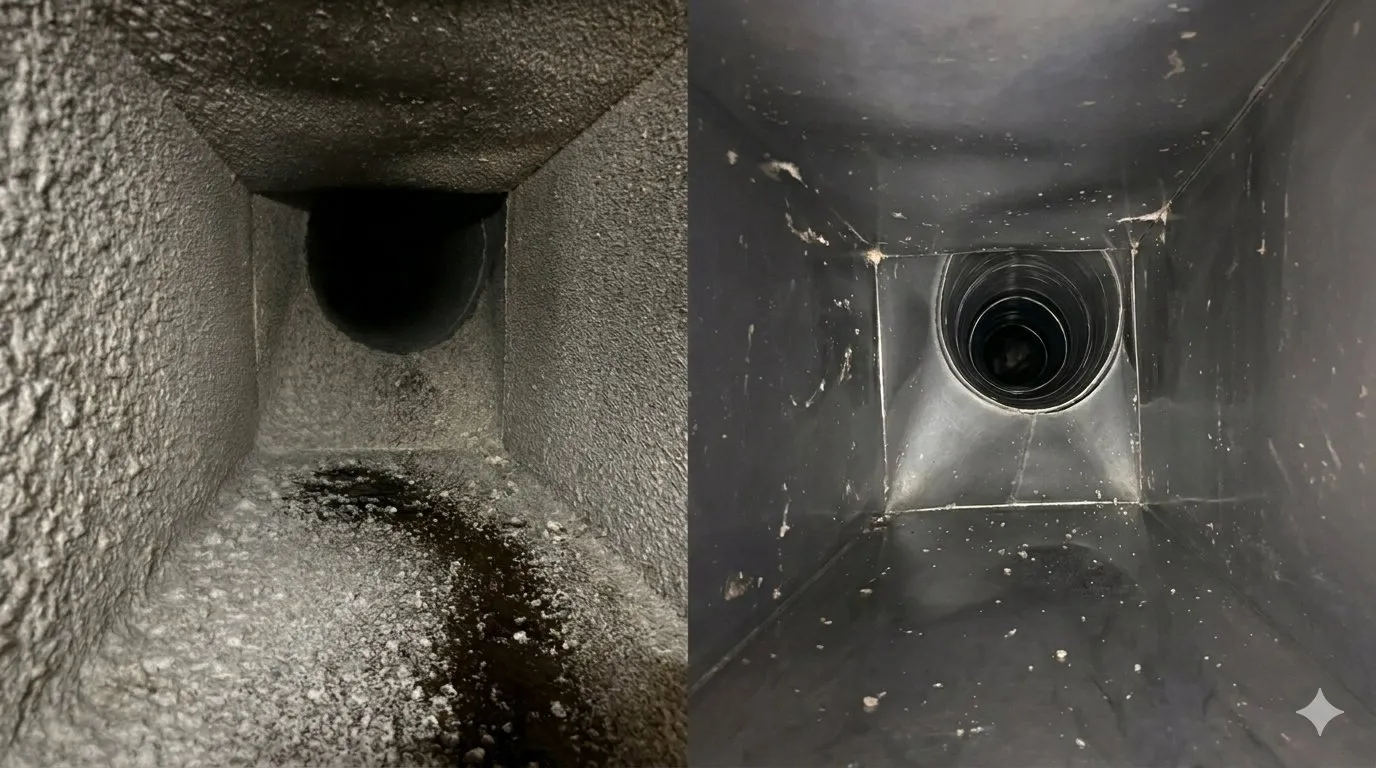
Why it’s worth doing now in Norton Heath
If a damper cannot close, the wall it sits in has a hole in it during a fire. Everything else about the compartment can be right and the duct still lets it down. Testing now is how you find out before it matters. Somewhere as small as Norton Heath, losing a kitchen or building to a fault is felt by everyone who uses it.
A single site or a whole portfolio, we price it on the same basis: what needs doing, how we get to it and when. The price is fixed before we start.
Why choose Duct Doctor in Norton Heath
- BESCA Vent Hygiene Elite member, cleaning to BESA TR19® Grease
- We diagnose before we treat
- One number for every site across the South East and London
- In business since 2009
Read how cleaning jobs are priced or our accreditations and certificates.
How we price fire damper testing
A fixed price needs a few facts first. We check:
- How big the system is
- Parking and loading at the site
- Whether it’s a one-off visit or part of a schedule
- Working hours and out-of-hours timing
What you pay depends on how big the system is, the condition it’s in and how easy it is to reach. We give you a fixed price before we start, so there are no surprises.
Helping us quote
You do not need the technical terms. It helps if you can send:
- Any previous report or certificate
- Where the site is and what kind of site it is
- Anything you’ve noticed, such as smells, noise, drips or poor airflow
- A few general shots of the system
Every quote begins with a look at the system, from your photos and details or, where that is not enough, a survey on site. Then we send a fixed price, before we start.
Common questions in Norton Heath
Can you get to a site in Norton Heath?
Yes, we work in villages as well as towns, and Norton Heath is covered. A survey first, from photos or a visit, means we arrive with the right kit.
Do you work at weekends in Norton Heath?
Yes. We work evenings, overnight and at weekends. The site is handed back ready to open. Tell us your opening hours when you ask for a quote.
Who is responsible for fire damper testing?
It’s the responsible person, under the Fire Safety Order 2005. Testing at least yearly and keeping the reports is how they can show it’s being done.
How long does fire damper testing take?
Typically the work takes a few hours for a single floor, with bigger buildings phased over more than one visit. The number of dampers and how they’re reached decide the rest.
Where does the waste go?
It’s contained and taken away. We collect grease, debris and waste water as we go, so it doesn’t spread.
Do we need to close while you work?
Not normally. The area we’re working in has to be out of use while we are there, so the visit goes in a quiet slot.
Can one contract cover all our sites?
Yes. One number covers all your sites across London and the South East, with visits on a regular schedule.
What is TR19?
It’s the industry benchmark for cleaning ventilation and kitchen extract systems, written by BESA. It covers how systems are inspected, cleaned and checked, and it takes a risk-based approach.
How the visit works
A visit follows the same order every time: sheeting and protection first, isolate whatever needs isolating, do the work, tidy up and hand over the paperwork. On site, the work takes a couple of hours for a few dampers, and a day or more across a big site. Visits to a village like Norton Heath are booked in advance, at a time that suits whoever runs the site.
- Before the visit, we agree access, timings and any areas with restrictions.
- Ceiling tiles and hatches are opened and each damper’s access panel removed.
- We release each blade and check it shuts all the way.
- We reset it and record any dirt, corrosion or damage.
- Panels and tiles go back, and the results are written up.
Getting ready for the visit
- Move anything stored near the system
- Tell us the best time to work, such as after service or at a weekend
- Arrange a key holder or contact on site
Getting a quote
The quickest way to a quote is to send photos: the system from a couple of angles, plus any access panels or hatches. Tell us what kind of site it is and when it’s open, and many jobs can be priced from that alone.
Related advice
Managing agents and facilities teams in Norton Heath
Landlords, managing agents and facilities managers book us, not only the businesses that use the systems. Where a system serves more than one tenant, such as a shared riser, it helps to agree who arranges the work, and we can quote for the whole system.
If you look after several sites, we can plan visits across the whole estate and price them together. Every building has its own written report, so records stay tidy.
Towns and villages near Norton Heath
Other services in Norton Heath
What your team can do, and what needs us
Your own staff can handle the daily basics: wiping down canopy surfaces, cleaning filters and keeping a simple log. What they can’t safely do is clean inside the ductwork, the fan or the risers, which is where we come in.
When your team notices a problem between visits, like drips, unusual noise, smells or damaged filters, it’s best reported rather than tackled in-house. We can diagnose it and quote.
Different parts, different methods
Fusible link fire dampers
The link has to be in good order for the damper to work. Each link is looked at as part of the test and any problems go on the report.
Ceiling voids and risers
Plant rooms and risers can be damp, which leads to corrosion. Signs of corrosion or water are recorded so it can be dealt with.
Looking after it afterwards
Looking after the system between visits is straightforward, and it helps at the next visit:
- Make sure access panels stay clear and usable
- Get remedials done soon after a failed test
- Keep the damper register up to date after any building work
- Report leaks or condensation near ductwork quickly
Tell other contractors where the dampers are, and that they mustn’t tie, wedge or obstruct them. If a damper has been disturbed, have it tested again.
Water is a damper’s enemy, so fix leaks and condensation near them promptly. Rusted parts are one of the main reasons dampers fail to close.