East Sussex · Fire damper testing
Fire damper inspection in Cackle Street
One call covers fire damper testing in Cackle Street, from survey to sign-off. CHAS and SafeContractor accredited, ISO 9001 and fully insured.
- Smoke dampers that need testing through their controls
- Blades that jam part-way when released
- Dampers affected by leaks or condensation
How we handle fire damper testing in Cackle Street
Wherever a duct crosses a fire-resisting wall or floor, there should be a fire damper inside it. Most are held open by a fusible link that melts at a set temperature, letting the blade drop and close the duct. Drop testing proves that this still happens, and we record the result for every damper we test. We’re often asked to deal with dust or grease build-up on damper blades and corroded dampers in damp risers and plant rooms, on hospitals and care homes, wall and floor dampers and motorised smoke dampers.
In rural areas, conversions, country hotels and care homes can have ductwork crossing fire-resisting walls, and the dampers in them are easily forgotten. The first visit starts by locating each damper.
It’s worth checking any contractor’s accreditations. Ours are BESCA Vent Hygiene Elite membership, cleaning to BESA TR19® Grease, plus CHAS, SafeContractor and ISO 9001, and we’re fully insured.
- Where
- Cackle Street (TN31)
- Wider area
- East Sussex
- Reporting
- Written report with photos
- Quotes
- Fixed quote, usually within a working day
- Hours
- When your site is closed, plus a 24/7 line
- Call
- 0345 646 2711
- Updated
- 30 October 2026
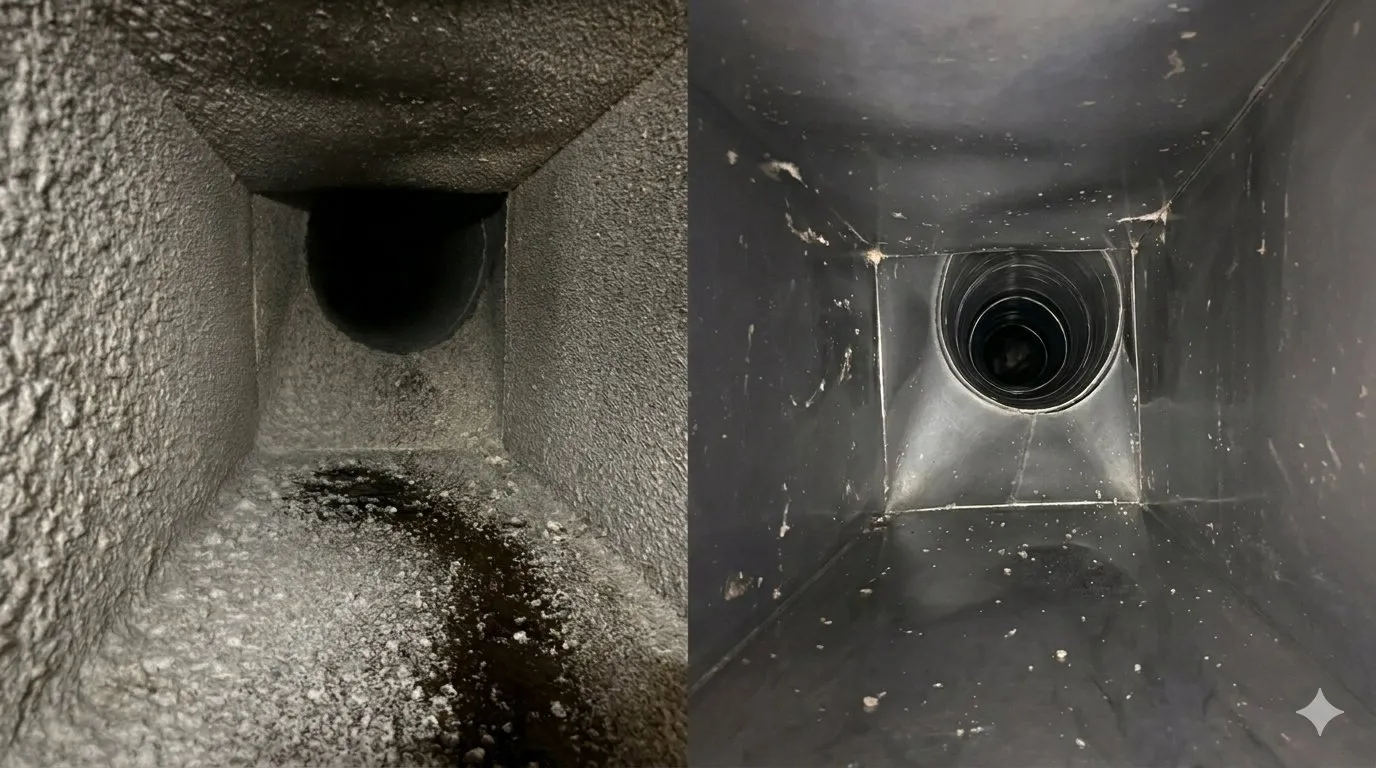
What fire damper testing looks like in Cackle Street
The FSA’s food hygiene register lists about 4 hospitals, care homes and childcare premises with registered kitchens or food service within roughly a mile and a half of the centre of Cackle Street. Buildings like these often have ducted ventilation, and wherever a duct crosses a fire-resisting wall or floor there should be a damper, tested at least once a year. About 3.9 miles south of Cackle Street is Conquest Hospital, the nearest hospital. Hospitals are a good example of a building with fire dampers across many floors and departments. Cackle Street sits within the area of East Sussex Fire and Rescue Service. In most workplaces and other non-domestic buildings, it’s the fire and rescue authority that enforces the Fire Safety Order.
Historic houses near Cackle Street, with Durhamford Manor about 3.1 miles west, are a reminder that older buildings can hold dampers in unexpected places. If you manage a school site such as Brede Primary School, any fire dampers can be tested in the holidays. The nearest hospital, Conquest Hospital, is about 3.9 miles south; healthcare buildings like it are a reminder that dampers protect people who cannot move quickly.
Cackle Street is about 5 miles north of Hastings, in East Sussex. From the centre of Cackle Street to the outskirts, we cover fire damper testing for every kind of premises, from small sites to large estates. Our East Sussex coverage runs to 289 places, Cackle Street among them. Maidstone is in our area too, about 23 miles from Cackle Street.
Postcode districts we cover here for fire damper testing: TN31. Streets in the area include Cackle Street, St Marys Close and Pottery Lane, all of which we cover for fire damper testing. Nearby, we also carry out fire damper testing in Brede (1 mile south), Westfield (2 miles south), Sedlescombe (3 miles west), Mill Corner (3 miles north) and Kent Street (3 miles south-west). We also work in nearby towns such as Hastings (5 miles south), Bexhill-on-Sea (8 miles south-west), St Leonards (6 miles south), Hastings Old Town (6 miles south), Belmont (6 miles south) and Heathfield (15 miles west).
Local landmarks in Cackle Street
Locally, jobs take us to businesses close to The Red Lion Public House and the streets around them. Cackle Street’s nearest station is Doleham station, roughly 1.6 miles south-east. Other landmarks nearby include Conquest Hospital (3.9 miles south) and Barn Theatre and Museum (3 miles south). Green spaces nearby include Senlac Hill and Flatropers Wood.
The process
We work around your opening hours, not the other way round. We book the visit for a time the area is closed, whether that’s an evening, overnight or a weekend. Once we’re in, the area is sheeted and anything that has to be off is turned off and cooled, and the job takes a couple of hours for a few dampers, and a day or more across a big site. We agree a date with you, plan the drive to Cackle Street and turn up when the site is quiet.
- We go through the damper schedule and any previous faults.
- We locate every damper and note any we can’t reach.
- Fire dampers are drop tested, and smoke dampers are tested through their controls.
- Dampers that pass are reset, and failures are logged with what we found.
- The report sets out the results, and we can quote to repair or replace failed dampers.
How to prepare
- Tell us where we can park and unload
- Plan for cooking equipment or plant to be off before we arrive
- Clear the space around the work
Ask for a quote
Getting a quote does not take long. Call or email with a few details and you will typically have a fixed price within one working day. Where a survey is needed, we arrange a time that suits the site.
Read more
Staff cleaning versus specialist work
Away from the kitchen, the in-house job is mainly checking: keeping grilles clear, noting unusual noise or smells and logging filter changes. Cleaning inside ducts and units is specialist work.
Day-to-day cleaning is something your team can do: wiping down canopy surfaces, cleaning filters and keeping a simple log. Inside the ducts, risers and fan is specialist work, which is where we come in.
Your questions about fire damper testing in Cackle Street
Can you work in Cackle Street outside opening hours?
Yes, evening, overnight and weekend work is normal for us. It means the site in Cackle Street keeps running as normal. Your opening times are the first thing we ask for.
Which fire service covers Cackle Street?
It’s East Sussex Fire and Rescue Service, which covers Cackle Street. Failed dampers on a report should be followed by a record of the repair, so the file shows the problem was closed out.
Do you offer emergency callouts?
Yes, any time. For anything urgent, such as a fan failure or damage after a fire, ring the 24/7 line and we’ll talk you through the next steps.
Can you quote from photos?
Often, yes. Photos of the system and the access, plus your opening hours and last report, are often enough. Where we cannot see enough, we arrange a survey.
What does TR19 mean?
A BESA specification, with two parts that matter most here: TR19® Grease for kitchen extract systems and TR19® Air for general ventilation. It isn’t legislation, but it’s the standard people check against.
Do you certify fire dampers?
You get a test report recording every damper we tested, showing where it is, whether it passed and what we found. It belongs in your fire safety log.
Where does the waste go?
Waste is contained during the work and removed when we leave, including grease, debris and dirty water. We do not leave it behind.
How much notice should we give?
That depends on the slot you want and the size of the job. Tell us your preferred dates when you ask for a quote, and for anything urgent, ring our 24/7 emergency line.
Managing agents and facilities teams in Cackle Street
Facilities teams in offices, schools and healthcare sites book us too across East Sussex. Larger estates can be phased building by building around the people who use them.
Keeping records across a portfolio is half the battle. Each visit produces a dated report with photos, ready to show insurers, fire officers or EHOs.
Aftercare tips
After the visit, a few habits help the work last:
- Fix water leaks in plant rooms and risers promptly
- Act on failed dampers rather than leaving them on file
- Don’t let hatches get painted shut or boarded over
- Warn anyone working in ceiling voids about the dampers
Put the next test in the diary within twelve months. The guidance is at least once a year, and booking the same month each year keeps it simple.
Water is a damper’s enemy, so fix leaks and condensation near them promptly. Corrosion is a common reason blades stick.
How we price fire damper testing
The survey tells us what the work involves. The main factors are:
- How many systems or sites are involved
- What state the system is in
- Any permits to work or inductions
- How easy every part is to reach
A single site or a whole portfolio, the quote is built the same way: what needs doing, how we get to it and when. You’ll have a fixed price before we start.
What we need to know
Photos let us diagnose from a distance. Try to include:
- Any symptoms, from odd noises to smells or leaks
- Close-ups of filters, grilles, hatches or access panels
- Any previous report or certificate
- The site address and the type of premises
Every quote begins with a look at the system, from your photos and details or, where that is not enough, a survey on site. After that, you get a fixed price for the work, before work begins.
What fire damper testing cannot fix
An honest diagnosis matters more to us than a booking, so here’s what fire damper testing won’t do:
- Dampers that were never installed where they’re needed
- Deciding where dampers should be fitted
- Fire alarm or control system faults behind a smoke damper
If in doubt, phone us on 0345 646 2711 or email us and we will say what we think before you book.
What the work covers
- Riser dampers
- Offices and schools
- Wall and floor dampers
- Hospitals and care homes
- Fusible link fire dampers
- Motorised smoke dampers
What the work involves, part by part
Access panels
If we can’t reach a damper, it goes on the report as inaccessible. We can fit access panels so it’s tested next time.
Schools, hospitals and care homes
In hospitals and care homes, people are there day and night. We plan the order of work with the site team to keep disruption to a minimum.