East Sussex · Fire damper testing
Fire Damper Testing in Battle
Fire damper drop testing and smoke damper testing, with a record for each damper for Battle, with a survey first and a report with photos at the end. Ask us for a fixed quote.
- Dampers affected by leaks or condensation
- Smoke dampers that need testing through their controls
- Dampers flagged on a fire risk assessment
Signs you need fire damper testing in Battle
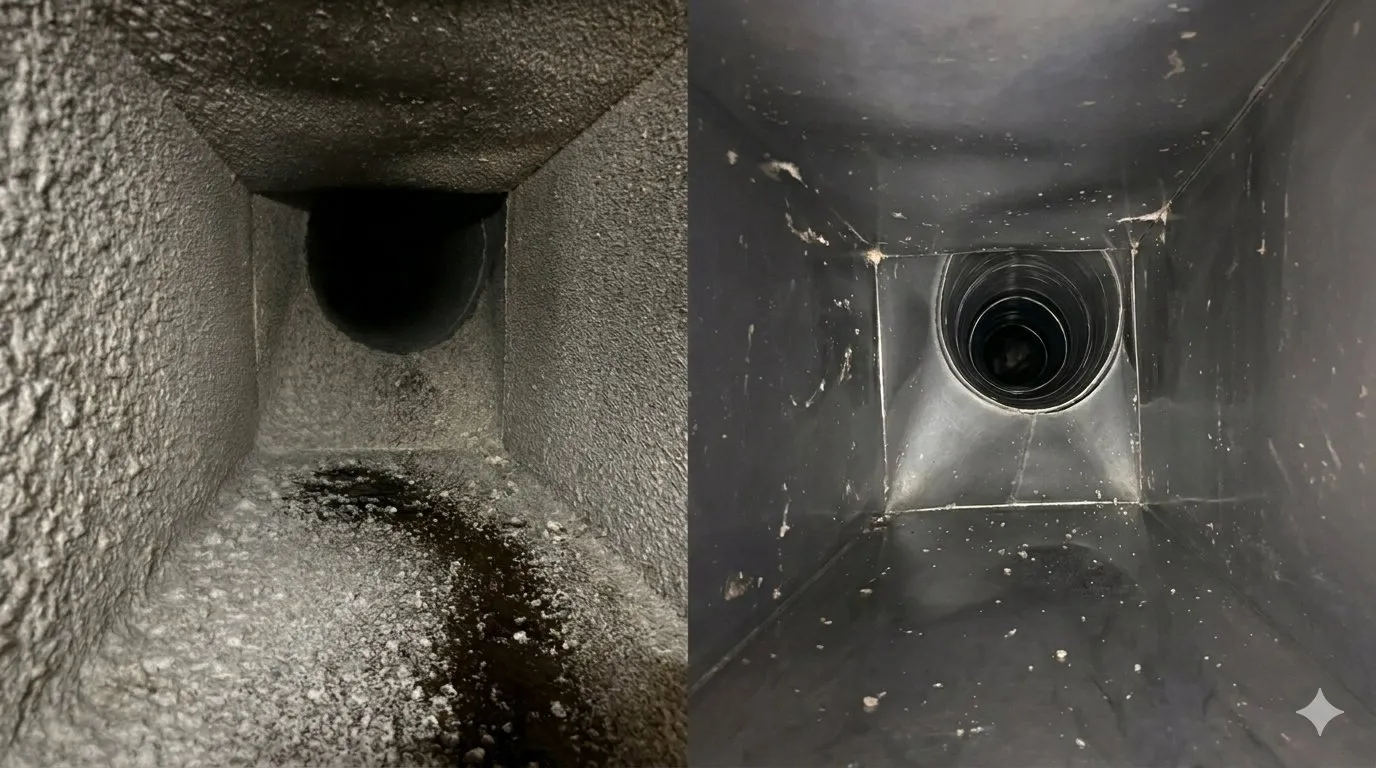
Dust settles on damper blades, runners and springs over the years. Where the duct carries grease or cooking vapour, grease coats them too, and either one can hold the blade part-open.
These are the problems we see most often:
- Dirty dampers that may not close
- Missing or out-of-date damper records
- Fire dampers with no recent test record
- Dampers hidden with no access panel or hatch
If you manage offices, shops or flats near Battle station, the ductwork in them may pass through fire-resisting walls and floors, and any dampers need testing at least once a year.
Questions to ask before booking
- What’s included in the scope, part by part
- Whether they recommend a next date
- If they look at the system before pricing
- If the quote is a fixed price or an estimate
Fire damper testing in Battle
The point of testing is to find dampers that fail. Where a blade sticks, a link is damaged or corrosion has set in, we note it and can quote to repair or replace the damper rather than leaving you with a problem and no fix. Common call-outs are for dirty dampers that may not close and dampers affected by leaks or condensation, across wall and floor dampers, motorised smoke dampers and riser dampers.
In a smaller place like Battle, buildings with fire dampers are more likely to be a school, a surgery, a care home or a hotel than an office block. The duty to keep them working is the same as in a city.
The report is your system’s health record: a dated account with pictures of everything we did. Grease extract cleans are also certificated to TR19® Grease through the BESCA VHE portal and sits alongside the report.
- Location
- Battle (TN33)
- Wider area
- East Sussex
- Paperwork
- Written report with photos
- Quotes
- A fixed price before any work starts
- Working hours
- After hours by arrangement; emergencies any time
- Phone
- 0345 646 2711
- Updated
- 30 October 2026
Fire dampers in Battle buildings
There are about 5 schools, colleges and universities and about 5 hospitals, care homes and childcare premises on the FSA’s food hygiene register within about 1.5 miles of central Battle. Buildings like these often have ducted ventilation, and wherever a duct crosses a fire-resisting wall or floor there should be a damper, tested at least once a year. East Sussex Fire and Rescue Service covers Battle. Fire and rescue authorities enforce the Fire Safety Order in most non-domestic premises, and keeping dampers working is part of the responsible person’s duty. For Battle, the closest hospital is Conquest Hospital, roughly 4.3 miles south-east. Healthcare buildings rely on fire compartments to protect people who cannot easily move, and dampers keep those compartments sealed.
If you manage an older building converted to a hotel or venue, like many historic houses in the area (Durhamford Manor is about 2.4 miles north-east), finding every damper is the first job. Hospitals such as Conquest Hospital, about 4.3 miles south-east, are a good example of buildings with dampers on many floors; if you manage a clinic, surgery or care home near Battle, the same annual testing applies.
Battle is about 5 miles north of Bexhill-on-Sea, in East Sussex. For fire damper testing in and around Battle, it’s easy to get a fixed quote: please give us a ring on 0345 646 2711 or use the quote form. We work across South East England and London, including Battle. Across East Sussex, we cover 289 places, and Battle is one of them. You can also see our page for Maidstone, roughly 24 miles from Battle.
We work across TN33 for fire damper testing and the streets around it. Streets in the area include High Street, Market Road and Station Road, all of which we cover for fire damper testing. You will find Battle on the A271 and A2100, which makes it straightforward for our technicians to reach for fire damper testing. We also cover Steven's Crouch (2 miles west), Netherfield (2 miles north-west), Mountfield (2 miles north), John's Cross (3 miles north) and Penhurst (3 miles west). Further out, we also cover Eastbourne (12 miles south-west), Hastings (5 miles south-east), Bexhill-on-Sea (5 miles south), Hailsham (11 miles west), St Leonards (5 miles south-east) and Polegate (12 miles south-west).
Near you in Battle
We work in commercial kitchens and buildings around Claverham Community College and The Abbey Hotel and the streets around them. The nearest railway station is Battle station, about 0.6 miles south-east of the centre. Well-known places in the area include Battle Museum of Local History (less than half a mile north) and Conquest Hospital (4.3 miles south-east). For a walk, there’s Church Wood and Robsack Wood and Senlac Hill.
Staff cleaning versus specialist work
Staff cleaning doesn’t replace a specialist visit; it supports it. Regular in-house cleaning slows the build-up, but hidden parts of the system still need specialist attention.
Staff cleaning and specialist work are not the same thing. Wiping filters daily and washing them weekly keeps the visible parts in order, but they do not reach the grease that builds up further in. Reaching it takes a specialist with the right equipment.
FAQs for Battle
Can you work in Battle outside opening hours?
Yes, we can come after you close and finish before you open. The work in Battle can fit around your hours. Tell us your opening hours when you ask for a quote.
Can you get to a site in Battle?
Yes. Battle is within the area we cover across London and the South East. Just mention lanes, gates or anything else about the site when you book.
Do you work with multi-site operators?
Yes. Send the list of sites and the work at each and we’ll quote them together.
Which accreditations do you hold?
We’re a BESCA Vent Hygiene Elite member, cleaning to BESA TR19® Grease. CHAS, SafeContractor and ISO 9001 are in place too, and we’re fully insured.
Which sectors do you work in?
We work for restaurants, pubs, hotels, schools, colleges, hospitals, care homes, offices and shops, as well as food production and leisure sites.
Do we need to close while you work?
Usually not. Booking the work out of hours means the site can carry on as normal. Larger jobs can be phased over several visits to keep things running.
Do you look at the system first?
Yes. For many sites, photos and a few details are enough, and larger or hidden systems get a visit.
What’s TR19?
TR19® is BESA’s specification for ventilation hygiene. TR19® Grease, a standalone specification since 2019, covers grease in kitchen extract systems, and TR19® Air covers general supply and extract systems.
What fire damper testing cannot fix
We’d rather tell you now than book work that will not help, so here are the limits:
- Fire alarm or control system faults behind a smoke damper
- Designing the building’s fire compartments
- Holes around ductwork in fire-resisting walls
Not sure which it is? You can give us a ring on 0345 646 2711 or use the quote form and we’ll tell you honestly before booking.
Where we work
- Riser dampers
- Fusible link fire dampers
- Offices and schools
- Motorised smoke dampers
- Hospitals and care homes
- Wall and floor dampers
How the visit works
Protection comes first: floors, worktops and anything near the work are covered. After that, the system is made safe and the work begins. The work on site takes a morning or an afternoon for a small number of dampers, longer where there are many, and the area is cleaned down before we leave. A site near Battle typically has room to park, so the questions are about access to the system and your hours.
- First we check the schedule and the last set of results.
- Each damper is found and checked for access.
- We test fire dampers by dropping them and smoke dampers by operating them through the controls.
- Dampers that pass are reset, and failures are logged with what we found.
- The report sets out the results, and we can quote to repair or replace failed dampers.
Before we arrive
- Mention any parking or loading restrictions
- Tell us the best time to work, such as after service or at a weekend
- Mention any locked doors, roof access or ceiling voids
How to get a quote
Need a price for fire damper testing? Please call 0345 646 2711, or email photos and tell us about the site. We will talk you through the work and send you a fixed quote before you commit to anything.
Read more
What the work involves, part by part
Access panels
A damper can only be tested if it can be reached. Most need an access panel in the duct and a hatch in the ceiling or wall.
Ceiling voids and risers
Where ductwork runs up through a building, there are often dampers at every floor. Testing goes floor by floor so nothing is missed.
What affects the cost of fire damper testing
Every site gets its own quote. These are the things that affect it:
- How big the system is
- Site rules, permits and inductions
- A single visit or a regular plan
- What state the system is in
Kitchens, offices, schools and hospitals are all priced the same way: how much there is, how we reach it, what state it’s in and when we can work. Call for a fixed quote and we will explain each part.
What we need to know
To speed up the quote, send us:
- The times we could work without disrupting the site
- The roof, plant room or outside wall the system runs to
- The paperwork from the last visit, if you have it
- Photos showing the whole system and its surroundings
Quotes are quick. Send a few details and pictures, and we usually reply with a fixed quote within one working day. If we need to see the system first, we book a survey around your hours.
Managing agents and facilities teams in Battle
Records are where multi-site compliance often slips. Each visit ends with a dated report and photos, so you can show an insurer or inspector what was done at each site.
The Fire Safety Order 2005 puts the duty to manage fire risk on the responsible person, which may be the employer, owner, landlord, FM or managing agent. Where responsibility is shared, records matter even more.