Buckinghamshire · Ductwork cleaning
Penn Street ductwork cleaning
Ductwork cleaning for commercial sites in Penn Street and across Buckinghamshire. BESCA Vent Hygiene Elite member, cleaning to BESA TR19® Grease.
- Years of grease along the duct floor
- Ductwork that has never been cleaned
- Grease pooling at the foot of the riser
Ductwork cleaning in Penn Street
Every duct has its own route. Some run a short distance to an outside wall, others climb several floors to the roof. We map the route during the survey, so we know where to get in and how long it will take. The work covers vertical risers, horizontal duct runs and bends and junctions, and people most often call us about a duct nobody has opened in years and years of grease along the duct floor.
In a village or hamlet like Penn Street, the kitchens that need extract cleaning are normally a pub, a school, a care home or a hall kitchen, wherever there is one. Each still has a canopy and duct that collect grease.
Our accreditations include CHAS, SafeContractor and ISO 9001, and we’re fully insured. On top of that, we are a BESCA Vent Hygiene Elite member, cleaning to BESA TR19® Grease, trading since 2009.
- Where
- Penn Street (HP7)
- Wider area
- Buckinghamshire
- Records
- Certificate and photo report
- Price
- Fixed quote, usually within a working day
- Working hours
- When your site is closed, plus a 24/7 line
- Call
- 0345 646 2711
- Page updated
- 30 October 2026
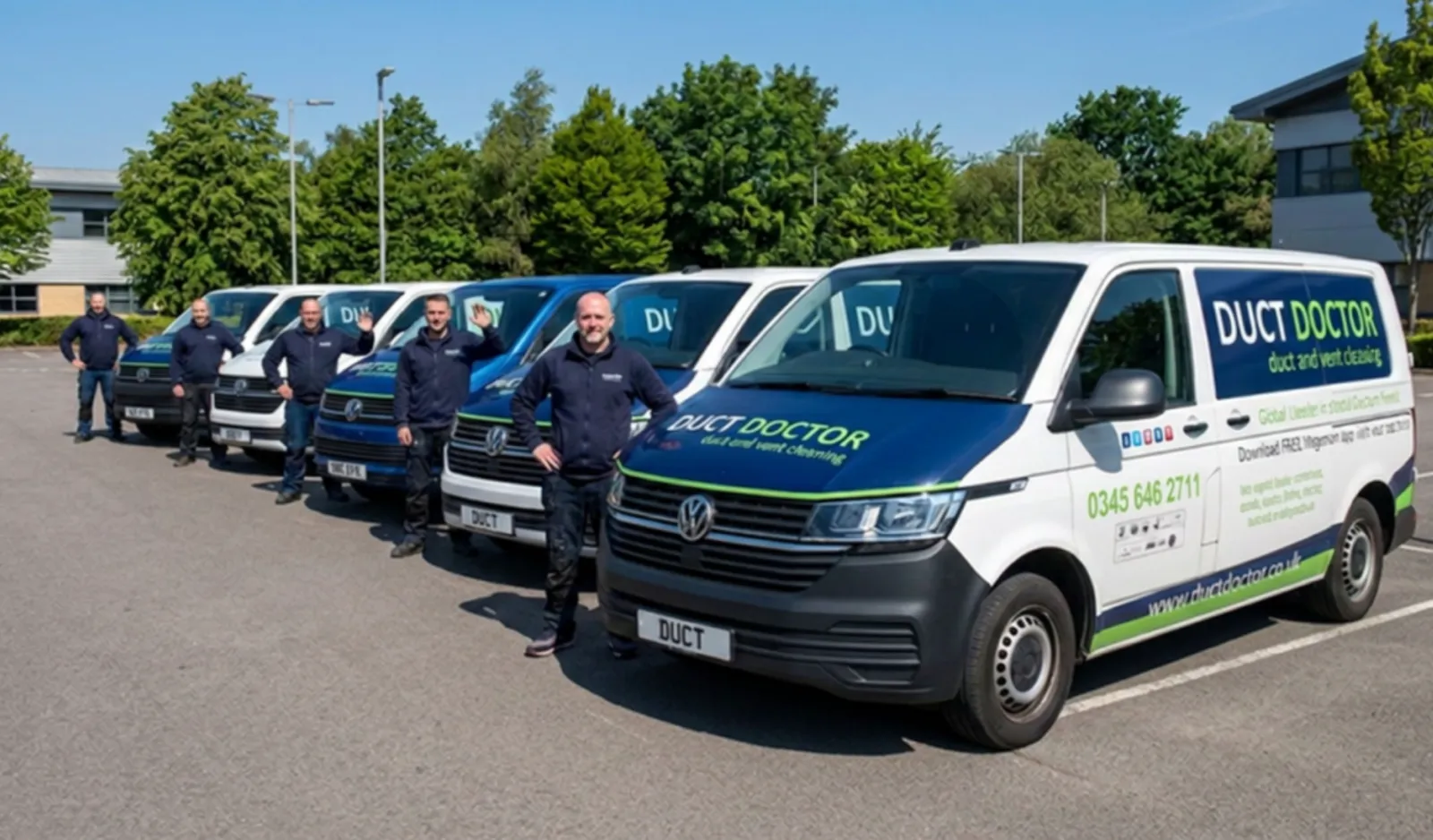
What ductwork cleaning looks like in Penn Street
The FSA’s food hygiene register includes about 4 pubs, bars and clubs in and around Penn Street, up to about a mile and a half out. Where they serve hot food, their kitchen extracts need cleaning to TR19® like any restaurant’s. Fire safety in Penn Street falls to Buckinghamshire Fire and Rescue Service. In most workplaces, including commercial kitchens, it’s the fire and rescue authority that enforces the Fire Safety Order. In Penn Street, food businesses are inspected by environmental health officers from Buckinghamshire council. A greasy canopy or dripping filters are the sort of thing an inspection can pick up. Our report lists what was cleaned and when, which is useful to have ready.
If you run a church or community hall kitchen, near Church of the Holy Trinity or elsewhere in Penn Street, its extract still collects grease from every lunch and event. Healthcare kitchens, like those at hospitals such as Amersham Hospital (about 1.8 miles east), often cook for long hours, which puts them in BESA’s heavier-use bands. School kitchens, at schools like Curzon Church of England Combined School for example, are typically cleaned in the holidays so no lunches are lost.
Penn Street is about 3 miles south-west of Amersham, in Buckinghamshire. Every kind of commercial site in Penn Street, we can take on ductwork cleaning. Visits can be booked for evenings, overnight or weekends so trading isn’t interrupted. Across Buckinghamshire, we cover 263 places, Penn Street among them. For sites nearby, see our Reading page, about 20 miles away.
Work in HP7 follows the same survey, fixed quote and written report as everywhere else we cover. We also cover Woodrow (1 mile east), Mop End (1 mile north), Beamond End (1 mile north-west), Winchmore Hill (1 mile south-east) and Coleshill (2 miles south-east). Larger places within reach include Aylesbury (13 miles north-west), High Wycombe (4 miles south-west), Chesham (4 miles north-east), Marlow (8 miles south-west), Amersham (3 miles north-east) and Beaconsfield (3 miles south).
Around Penn Street
We work in commercial kitchens and buildings around The Squirrel pub and Holmer Green Senior School. Penn Street’s nearest station is Amersham station, roughly 2.6 miles north-east. A little further out are Great Missenden (2.7 miles north) and Amersham Hospital (1.8 miles east). For a walk, there’s Gomm's Wood.
Questions from Penn Street
Can a school canteen extract in Penn Street be done out of term time?
Yes, and it’s the easiest time to do it. Around Penn Street, the Food Standards Agency lists about 3 schools and colleges with registered kitchens within a mile and a half or so. Tell us your holiday dates and we will book the visit for when the site is empty.
Can you work in Penn Street outside opening hours?
Yes, nights and weekends are routine for us. The work in Penn Street can fit around your hours. Your opening times are the first thing we ask for.
Is TR19 a legal requirement?
No. TR19® is BESA’s specification, not legislation. The law is the Regulatory Reform (Fire Safety) Order 2005, which makes the responsible person assess and reduce fire risk, and cleaning to TR19® is the recognised way to show grease is under control.
Where does the waste go?
It’s contained and taken away. We collect grease, debris and waste water as we go, so it doesn’t spread.
Do you offer maintenance contracts?
Yes. Scheduled maintenance plans are part of what we do, set at the interval the system needs. The report from each visit recommends the next date.
What types of premises do you cover?
Any site with a kitchen or a ventilation system to look after, from a small pub to a hospital. We work with hotels, schools, care homes, offices, retail and leisure sites.
How do you keep the site clean during the work?
By covering it before any work starts. The work is kept contained and clean down when we finish.
What accreditations do you have?
Our accreditations are CHAS, SafeContractor and ISO 9001, and we’re a BESCA Vent Hygiene Elite member, cleaning to BESA TR19® Grease. The Vent Hygiene Elite scheme is run by BESCA and audited independently.
Towns and villages near Penn Street
Other services in Penn Street
Honest limits
We’d rather tell you now than book work that will not help, so here are the limits:
- Ductwork that’s corroded, split or holed (that needs a ductwork contractor)
- Faulty fire dampers
- A duct that’s too small or badly routed for the kitchen (a design issue)
Not sure which it is? You can call us on 0345 646 2711, or email photos and we will tell you honestly.
Parts of the system we cover
- Access panels
- Bends and junctions
- Attenuators
- Vertical risers
- Horizontal duct runs
- Multi-storey ducts
Keeping the system healthy
Good habits slow the build-up between visits. Our tips:
- Run the extract fan throughout service
- Flag drips from the duct straight away
- Leave a way through to the access panels
- Diarise the next duct clean
Access panels are closed and sealed back up after cleaning, and the surrounding area is left clean. Waste grease and water are taken away.
Keep to the cleaning interval on the report. A change in cooking hours may change the interval under BESA guidance, and grease thickness testing will show it.
How the visit works
We’re used to working while the site is closed. A lot of visits happen overnight or at weekends, so the site can open as normal afterwards. The visit itself takes a few hours for a short run, longer for long runs and tall risers. A few photos of the system help us make the most of a visit to a place like Penn Street.
- Diagnosis: a survey of the duct’s route, size and access.
- A fixed quote follows, based on what we found.
- We clean section by section, working from panel to panel.
- We take extra care at bends and at the foot of risers.
- The duct is signed off with readings, photos and a next clean date.
Preparing for the visit
- Plan for cooking equipment or plant to be off before we arrive
- Find the previous report, if there is one
- Mention any locked doors, roof access or ceiling voids
Getting a quote
Photos are enough for some jobs, while others need a look on site. Big or complicated sites, and systems that are hard to see in photos, get a survey first. Either way, you get a fixed price before any work starts.
Advice
Staff cleaning versus specialist work
When your team notices a problem between visits, such as dripping grease, a noisy fan, a smell or a filter that will not come clean, it’s best reported rather than tackled in-house. We can diagnose it and quote.
Day-to-day cleaning is something your team can do: wiping canopies, washing grease filters and recording it in a log. Inside the ducts, risers and fan is specialist work, which is where we come in.
Part by part
Attenuators and discharge
The last section of duct before the discharge is often the coolest, which can mean heavier deposits. It’s tested and cleaned along with the rest.
Bends and transitions
Bends, elbows and changes of size are where grease collects most. The air slows and drops its load, so these points get extra attention.
Multi-site and managed buildings
For anyone managing more than one site, we can plan visits across the whole estate and price them together. Every building has its own written report, so records stay tidy.
Managing agents often deal with us directly. Tell us the site, the work and the access arrangements, and we’ll send a fixed quote.
What affects the cost of ductwork cleaning
Sites vary more than people expect. The main factors:
- How easy every part is to reach
- Any permits to work or inductions
- What state the system is in
- How big the system is
You will not find a price list here, because the cost depends on the site in front of us. Call for a fixed quote, and we’ll talk you through it.
What we need to know
A few details help us quote accurately. When you get in touch, it helps to send:
- Problems your staff have spotted
- How we’d reach plant on a roof or in a plant room
- Any previous report or certificate
- Close-ups of filters, grilles, hatches or access panels
There’s no standard price list, because every site is different. Instead, we look at your site first, from photos or a survey, then send a fixed quote. To start, call us on 0345 646 2711, or send details by email.