Hampshire · Fire damper testing
Fire damper testing in North Street, Hampshire
Looking for fire damper testing in North Street? We diagnose first, fix the price and book the work around your hours, finishing with a written report and photos.
- Fire dampers nobody can get to
- Smoke dampers with no recent test
- Gaps in the fire damper test log
What happens if it’s left?
Fire risk assessors and insurers may ask to see damper test records. Having a current report ready for a building in North Street saves a scramble when the question comes. Systems in rural buildings are often out of sight and out of mind.
You will not find a price list here, because the cost depends on the site in front of us. For a fixed quote, give us a ring on 0345 646 2711 or email us, and we’ll explain what it covers.
What you get with us
- Every job surveyed first
- CHAS and SafeContractor accredited, with ISO 9001
- We’re fully insured
- A written report with photos after every visit
Read our cost guide or our accreditations.
Fire damper testing in North Street
In a fire, ductwork can act as a shortcut for flame and smoke from one part of a building to the next. A damper only does its job if the blade can drop fully. Regular drop testing is how that gets checked in each part of the building. The work covers offices and schools, fusible link fire dampers and motorised smoke dampers, and common reasons people get in touch are gaps in the fire damper test log and corroded dampers in damp risers and plant rooms.
In a village or hamlet like North Street, there may be only a few buildings with fire dampers. Each damper still needs testing at least once a year.
Think of the report as the system’s health record: dated, with photos, and showing what was done. For TR19® Grease cleans, the certificate comes through the BESCA Vent Hygiene Elite portal, ready for your insurer.
- Place
- North Street (SO24)
- Wider area
- Hampshire
- Records
- Report and pictures after the visit
- Price
- A fixed quote up front
- When we work
- When your site is closed, plus a 24/7 line
- Telephone
- 0345 646 2711
- Reviewed
- 30 October 2026
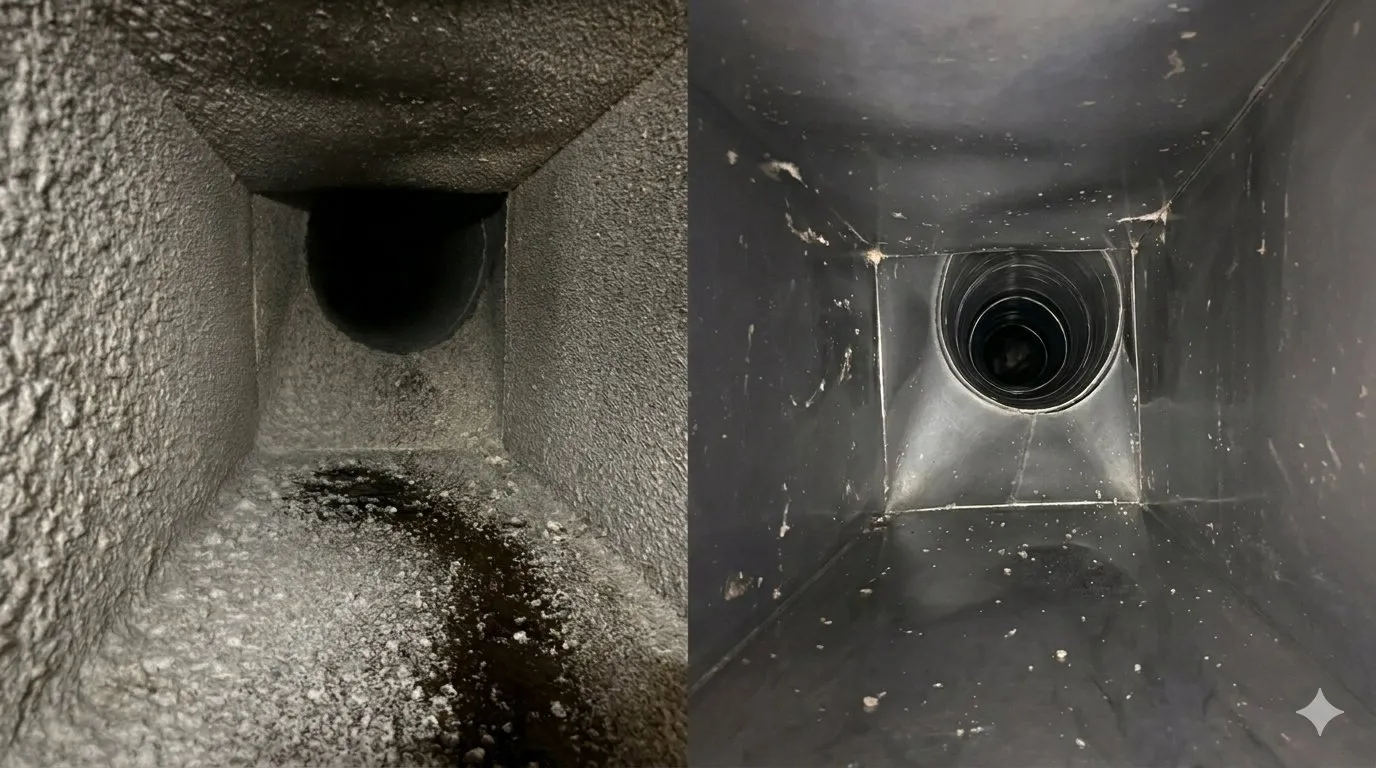
How the visit works
Protection comes first: floors, worktops and anything near the work are covered. Then we make the system safe and start. The work on site takes a morning or an afternoon for a small number of dampers, longer where there are many, and the area is cleaned down before we leave. A quick note on how to find the site and where to park makes a visit to North Street run smoothly.
- Before the visit, we agree access, timings and any areas with restrictions.
- We open up ceilings and hatches and take off each access panel.
- We release each blade and check it shuts all the way.
- The damper is reset and its condition noted.
- We close everything up and send the results in a report.
Getting ready for the visit
- Have your last certificate or report to hand
- Agree a time when the area can be out of use
- Tell us about site rules, permits or sign-in
Getting a quote
Photos are enough for some jobs, while others need a look on site. Big or complicated sites, and systems that are hard to see in photos, get a survey first. Either way, you get a fixed price before work begins.
Read more
Fixed quotes for fire damper testing in North Street
Every site gets its own quote. These are the things that affect it:
- The times the site is available
- The condition we find in the survey
- Whether several sites go on one quote
- Any permits to work or inductions
The cost depends on how big the system is, what state it’s in and how easy it is to reach. We give you a fixed price before we start, so there are no surprises.
Helping us quote
To speed up the quote, send us:
- Any access panels or hatches you can see
- Photos showing the whole system and its surroundings
- How we’d reach plant on a roof or in a plant room
- The site address and the type of premises
Getting a quote doesn’t take long. Send a few details and pictures, and we typically reply with a fixed quote within one working day. Where a survey is needed, we arrange a time that suits the site.
Fire damper testing around North Street
North Street’s nearest hospital, Alton Community Hospital, is about 5.1 miles north-east. Hospitals are a good example of a building with fire dampers across many floors and departments. North Street is about 51 miles from central London, well within the area we cover across London and the South East. Evening, overnight and weekend visits are all possible.
Alton Community Hospital, about 5.1 miles north-east of North Street, is the kind of building where dampers protect every compartment; smaller care sites need the same annual tests. Bentworth Hall, about 3.9 miles north, is one of the historic houses near North Street, and older buildings converted to new uses often have ventilation added later.
North Street is about 6 miles south-west of Alton, in Hampshire. Across the SO24 area, we can carry out fire damper testing at your premises. North Street is one of 683 places in Hampshire we cover for commercial clients. We also work in Southampton, around 18 miles away.
Every address in SO24 is within our area for fire damper testing, from busy streets to back roads. We also cover the places around North Street: Gilbert Street (1 mile south-east), Ropley (1 mile south), Ropley Dean (1 mile south-west), Kitwood (1 mile east) and Charlwood (2 miles south-east). Larger places within reach include Basingstoke (12 miles north), Winchester (10 miles west), Eastleigh (14 miles south-west), Horndean (13 miles south), Chandler's Ford (15 miles south-west) and Alton (6 miles north-east).
Around North Street
Nearby you’ll also find Barton Castle (3.3 miles north-west) and Alton Community Hospital (5.1 miles north-east). For a walk, there’s Shutts Copse and Red Hill.
Staff cleaning versus specialist work
Keep a record of what your team does. A simple log of filter washes, wipe-downs and checks shows an inspector that the system is looked after between visits, next to our reports.
Your own staff can handle the daily basics: wiping down canopy surfaces, cleaning filters and keeping a simple log. What they cannot safely do is clean inside the ductwork, the fan or the risers, and that is where we come in.
Places near North Street
Also in North Street
Honest limits
To be straight with you, some problems need a different fix:
- Dampers that were never installed where they’re needed
- Control wiring problems outside the damper itself
- Approving the building’s fire strategy
If you are not sure, just phone us on 0345 646 2711 or use the quote form and we’ll give you a straight answer.
Where we work
- Fusible link fire dampers
- Wall and floor dampers
- Riser dampers
- Offices and schools
- Motorised smoke dampers
- Hospitals and care homes
Between visits
Simple habits between visits make a real difference. Our advice:
- Add new dampers to the register as they’re fitted
- Keep ceiling hatches and duct panels easy to open
- Report leaks or condensation near ductwork quickly
- Brief other trades about dampers in ceilings and risers
When we finish, we send a report covering every damper on the visit, with its location and its result. Keep it with the building’s fire safety records so it’s to hand for assessors and insurers.
A simple register of every damper helps a great deal: location, type, last test date and result. It stops dampers getting lost as the building changes.
Do you need fire damper testing in North Street?
Buildings in North Street change owners, tenants and maintenance contractors over the years, and the damper records do not always go with them. With no register, it’s hard to say how many dampers exist, let alone when they were tested.
Common reasons sites call us include:
- Dampers that cannot be reached without an access panel
- Missing or out-of-date damper records
- Dampers overdue for their annual drop test
- Fire damper items raised by an assessor
Site managers at schools such as Ropley Church of England Primary School normally find the summer break the easiest time for ceiling work like damper testing.
Comparing quotes
- Proof of accreditation you can verify
- Whether VAT is included
- How they set the interval to the next visit
- Whether a survey comes first
FAQs for North Street
Can the work in North Street be done at night or at weekends?
Yes, we can come after you close and finish before you open. The site is handed back ready to open. Your opening times are the first thing we ask for.
Do you cover smaller places like North Street?
Yes, we work in villages as well as towns, and North Street is covered. The journey is planned ahead, so a few details about the route help.
Is TR19 a legal requirement?
No. The law sets the duty; TR19® is the benchmark used to show it’s met. Under the Regulatory Reform (Fire Safety) Order 2005, the responsible person has to manage fire risk, and many insurers can refuse or reduce a claim without proof of cleaning.
Which kinds of sites do you work on?
Restaurants and pubs, hotels, schools and colleges, hospitals and care homes, offices and retail, plus food production and leisure sites.
Can one contract cover all our sites?
Yes. We work across South East England and London, so we can schedule a run of sites as one programme. Every site has its own report.
What happens if you cannot reach some of it?
We never leave them off the paperwork. You’ll know exactly which parts weren’t reached and why, and we can quote to improve the access.
Do you have insurance?
Yes. Full insurance covers our work, and we have been trading since 2009.
What happens to the waste?
We take it away when we go. During the work, it’s contained so the area stays clean.